
Guide
Introduction
The long-awaited Infrastructure Investment and Jobs Act (IIJA) will provide much-needed funding to address the deteriorating infrastructure across the United States. In 2021, the American Society of Civil Engineers graded the U.S. infrastructure as a C-, a potentially dire situation for the future of our country’s roadways, waterways, airports, and seaports.
A reported 43% of our roadways are in poor condition, 7.5% of bridges are structurally unsound, and there is a $786 million backlog on road and bridge projects.
If not addressed, the economic impact will cost trillions of dollars and risk the well-being of American citizens across the country.
On November 15th, 2021, President Joe Biden signed into law House Bill H.R. 3684, otherwise known as the Infrastructure Investment and Jobs Act (IIJA). According to The White House, the bill addresses the provisions required for federal-aid highway, transit, highway safety, motor carrier, research, hazardous materials, and rail programs of the Department of Transportation (DOT).
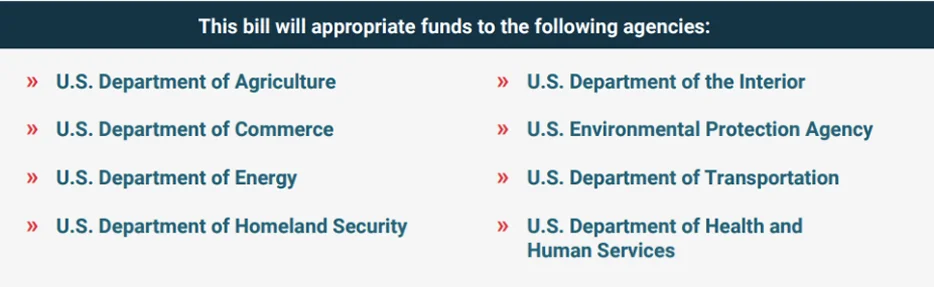
So, what’s in the bill for transportation agencies?
At the federal level, the funds will be broken down as follows:
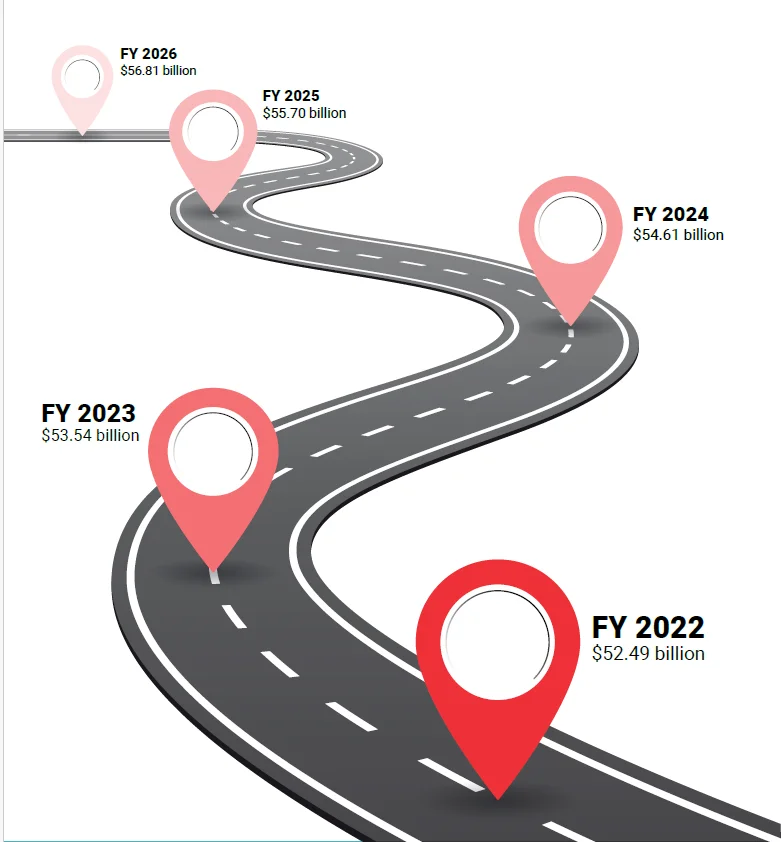
An overview: Infrastructure Investment and Jobs Act
The IIJA will provide $973 billionv over the next five years (the fiscal years 2022–2026) to fund a multitude of old and new programs to improve transportation, water, power and energy, environmental remediation, public lands, broadband, and more.
Essentially, the IIJA has injected an extensive $273.15 billion into the Highway Trust Fund for highways, roads, and bridges over the next five years. The funds will be spread across nine federal-aid programs and will vary state-by-state according to a specific formula that considers criteria such as population size. Once state agencies receive the federal funds, there will be a great deal of autonomy on which projects will be undertaken. However, some transportation programs that receive competitive grants will still need to be reviewed by the USDOT.
With the first portion of money scheduled for appropriation at the beginning of 2022, state agencies are rapidly preparing to launch new initiatives across the board, from shovel-ready projects to larger, more complex projects. With a roughly 20% higher budget than 2021, the additional funds can be effectively used to correct many of the errors made to America’s transportation grid in the 1950s. To many, the bill is a path to the future through equity, sustainability, collaboration, and technology.
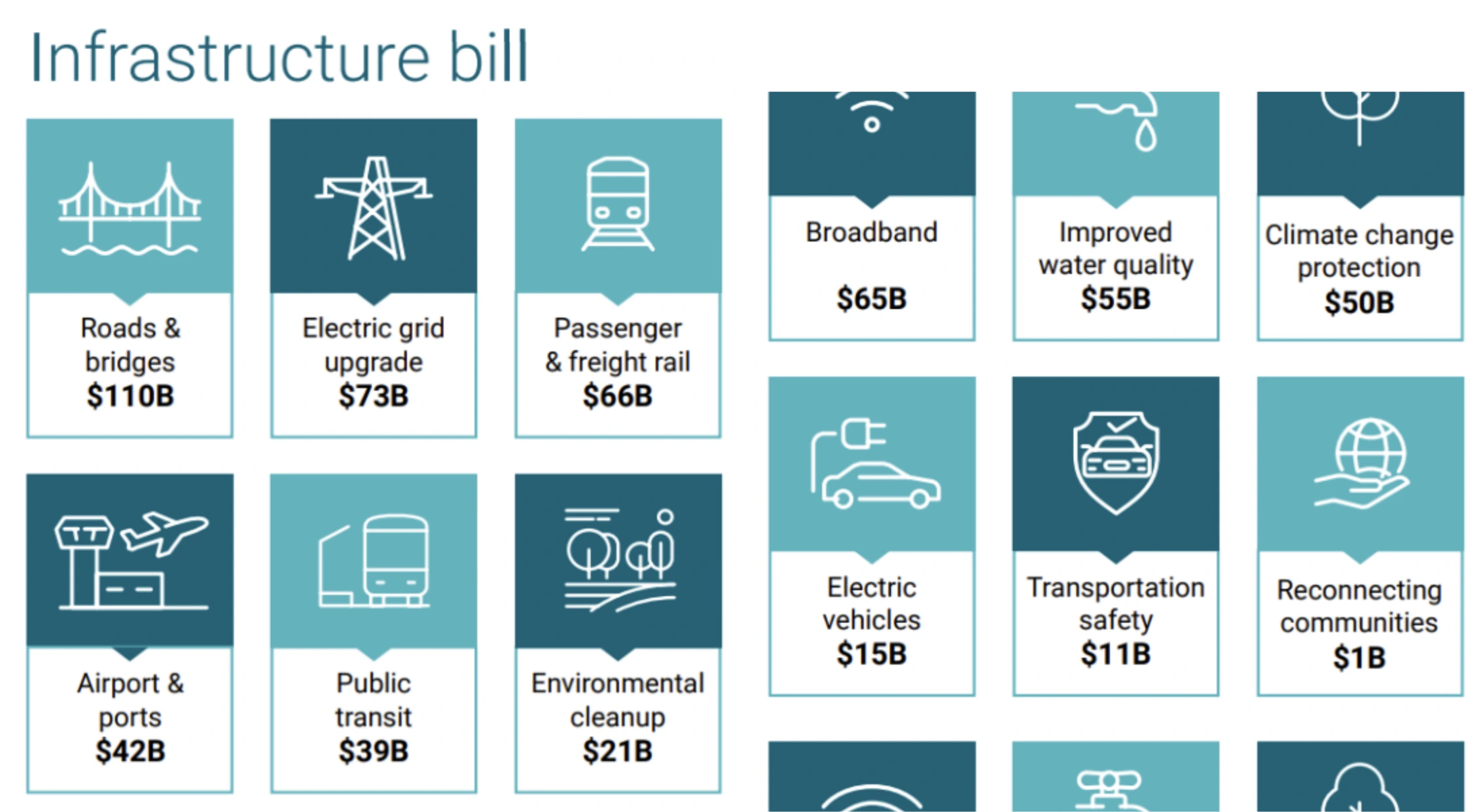
Highlights: Highways, roads, and bridges
- $72 billion over the next five years will be used for changes to the Surface Transportation Block Grant (STBG) to:
- Increase funding for off-system bridges, which total roughly half of all bridges in the United States.
- Ensure greater equity for smaller communities by adding a fourth population band for communities with 50,000 to 200,000 residents.
- Create new program funding eligibility for programs such as:
- Installing of an electric vehicle (EV) charging infrastructure
- Installing of measures to protect transportation facilities from cyber threats
- Projects to increase tourism
- Wildlife collision mitigation
- Resiliency improvements
- Increase funding to $7.2 billion for the Transportation Alternatives Program (TAP).
- $40 billion will be directed to the Bridge Investment Program (BIP), 50% of those funds will be reserved for large projects (over $100 million).
- $15 billion will establish a new National Infrastructure Project Assistance Grant for projects such as highways, bridges, and intercity passenger rail systems.
- $8 billion in increased funding for the Nationally Significant Freight and Highway Projects (NSFHP) grants program, with 30% of the funds reserved for rural projects.
- $2 billion will create a new Rural Surface Transportation Grant Program.
- $1 billion will be given to the Reconnecting Communities Pilot Program over the next five years. In addition, $150 million is reserved for planning grants, and $350 million will be available for capital construction grants.
- $350 million will create a new Wildlife Crossings Pilot Program to reduce collisions and/or improve habitat connectivity.
- $30 million cap on private activity bonds, increased from $15 milion, will boost public-private partnerships on future surface transportation projects. Local governments will also be eligible for surface transportation funding alternative programs.
- $25 million will be used to address pedestrian threats, which is defined in the IIJA as a “project to install raised concrete or other metal posts on a sidewalk adjacent to a roadway that is designed to slow or stop a vehicle.”
Green initiative
- $8.7 billion will be used to create the Promoting Resilient Operations for Transformative, Efficient, and Cost-saving Transportation (PROTECT) program. This program will include four sub-grants:
- The Resilience Improvement Grant ($980 million)
- The Planning Grant ($140 million)
- The Community Resilience and Evacuation Route Grant ($140 million)
- The At-Risk Coastal Infrastructure Grant ($140 million)
- $6.42 billion is allocated to the Carbon Reduction Formula Grant. Eligible projects should be used to promote fuel-saving strategies for both motorized and non-motorized users of the road.
- $2.5 billion is allocated to charging and Fueling Infrastructure Grants for local and state agencies to promote infrastructure deployment for EVs, and hydrogen, propane, and natural gas in designated areas.
Public transit
- $69.9 billion over a period of five years to improve the public transit system. According to the White House, the IIJA is providing the “largest investment in public transportation in U.S. history.”
- $400 million Smart Starts project funds will be jumping from $300 million to $400 million.
- $150 million boost to the Capital Investment Grants (CIG) Program. The available federal resources have increased from $100 million to $150 million.
Equity and the IIJA
The Reconnecting Communities Pilot program is explicitly designed to correct divisions created by adding highways through low-income communities in the 1950s and 1960s. $1 billion has been set aside to correct some damage and remove or retrofit highways that make mobility difficult for urban neighborhoods. “The development of the Interstate Highway System connected our country in ways it hadn’t been previously, but it also upended neighborhoods and left communities divided, many times over economic and racial lines. In many communities of color, nearby highways continue to represent real barriers for getting around and getting ahead,” EPW Committee Chairman Tom Carper (D-Delaware) said in a statement. “The Reconnecting Communities Act would empower communities to reverse this unfortunate legacy by building spaces over and around our highways, revitalizing nearby areas as a result. This legislation would help fund projects like a highway cap on I-95 in Wilmington to reconnect cities and open the door to a more equitable and sustainable future.”
New York is already beginning work on the Reconnecting Communities program in Buffalo. “Reconnecting neighborhoods that were severed by asphalt highways is a cornerstone of our bold infrastructure vision for a better New York,” Governor Hochul said. “Better infrastructure means better quality of life, and the communities around the Kensington Expressway in Buffalo and across our state deserve nothing less. These projects will help right the wrongs of the past through safer and reliable transit networks, landscapes designed to bring communities together, and routes that are friendlier for pedestrians and bikers.”
Communities of color are twice as likely to use public transportation, yet many lack adequate public transit options. Additionally, improving transportation options for millions of Americans will create new opportunities, including more affordable housing. In addition, there is a multibillion-dollar repair backlog that includes more than 24,000 buses, 5,000 rail cars, 200 stations, and thousands of miles of track, signals, and power systems in need of replacement, which can now be addressed through new funding by the IIJA.
Identifying disinvested communities before implementing any of the above programs or projects is a necessary first step toward equity. Each state will identify specific areas, as few places in the IIJA clearly define disinvested communities. For example, states like California and New York have defined “environmental justice communities” to help identify specific areas that should receive project funding.
Sustainability and the IIJA
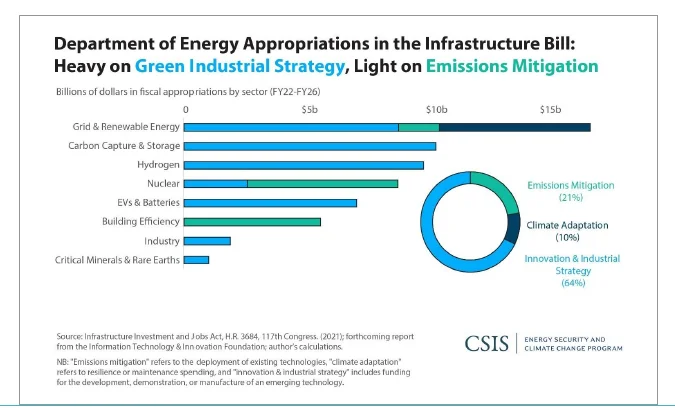
The transportation sector in the United States is now the largest single source of greenhouse gas emissions. The IIJA will help the country take its first steps towards achieving emissions and pollution goals set for 2030. President Biden set a 2030 Greenhouse Gas Pollution Reduction Target before signing the IIJA, aiming to reduce greenhouse gas emissions by 50% to 52% from the 2005 levels by 2030. Furthermore, $18.9 billion is set aside for carbon management infrastructure, with $15 billion earmarked specifically for low-carbon mobility, including the government’s first investment in the electronic vehicle (EV) charging infrastructure.
Projects in eighteen states will receive funding through the Infrastructure for Rebuilding America (INFRA) program to support jobs and local economies. “These timely investments in our infrastructure will create jobs and support regional economies while helping to spur innovation, confront climate change, and address inequities across the country,” said Secretary Pete Buttigieg.
It is important to note that the expansion of highways and construction of new major roadways can potentially lead to higher emissions in the long term, according to a study from the nonpartisan George Climate Center. The study found that the rise or reduction in emissions totally depends on how states, local planning agencies, and the USDOT allocate and utilize funds. According to the analysis, if funds are used to build highways, the law might have the opposite effect, increasing emissions by 1.6% by 2032 compared to the baseline scenario. Emissions would rise sharply due to a phenomenon known as ‘induced demand,’ which refers to incremental increases in traffic volume that have been noticed when new roads or lanes are built.
Collaboration and the IIJA
It has never been more critical for collaboration among internal and public stakeholders. In part, disinvested communities came to be because of the lack of communication with the public and the ease of right of way land purchase. The success of the projects over the next several years will rely on two key factors:
Communication with the public
Public engagement should be at the forefront of any project that will impact a community. The American Road & Transportation Builders Association estimates that the money allocated for just the transportation sector will add $488 billion to the U.S. GDP by 2027. With so much on the line for the American citizens, public feedback can help shape projects for the betterment of all.
Collaboration with internal stakeholders
Consistent processes, a single source of the truth, and digitization of processes will ensure that your projects stay on track. As outlined in the next section, the IIJA explicitly sets money aside for technology for this sole purpose.
Interorganizational communication will play a prominent role in successfully launching projects. With so many projects ranging from water to roads being undertaken, builds and digs (e.g., road, water, sewer, gas, electric, etc.) involving the right of way can save both time and money.
IIJA and technology
All eyes are on the construction industry leading into 2022. Investment in technology, security, and a skilled workforce ahead of the flurry of projects will prepare an agency for success. Workforce shortages are at an all-time high, with the Associated General Contractors (ACG) reporting that 89% of contractors are having difficulty finding labor.
This is why the IIJA will also direct $100 million over five years for advanced digital construction management systems and related technologies. These funds will be used to work towards the goal of maximizing interoperability among systems, products, tools, or applications, boosting productivity, reducing project delays and cost overruns, and enhancing safety and quality. McKinsey estimates if contractors more widely used these technologies, construction productivity would increase by 14% to 15%, while the construction costs would decrease by 4% to 6%. Therefore, the $100 million devoted to construction technologies is equally as important as the actual project funding by ensuring that the money allocated is used timely and accurately.
The IIJA aims to accelerate technology adoption for public agencies by providing funding specifically to promote, implement, deploy, demonstrate, showcase, support, and document the application of advanced digital construction management systems, practices, performance, and benefits. Adding the additional funding to new and existing technology systems will help agencies better prioritize, manage, and maintain the budgets and onset of projects over the next several years.
This technology will also help contractors increase productivity and transparency. With new regulations regarding project reporting, the government can easily track how funds are being allocated and ensure efficiency. As highlighted in the IIJA, the technology funding should be used to:
- Accelerate state adoption of advanced digital construction management systems applied throughout the construction lifecycle (including through the design and engineering, construction, and operations phases).
- Provide more timely and productive information-sharing among stakeholders through reduced reliance on paper to manage construction processes and deliverables.
- Deploy digital management systems that enable and leverage digital technologies used by contractors on construction sites. These could range from state-of-the-art automated and connected machinery to optimized routing software that allows construction workers to perform tasks faster, safer, more accurately, and with minimal supervision.
- Provide technology training and workforce development to increase the capabilities of project managers and sponsors who work with state and local government units.
- Reduce the environmental footprint of construction projects using advanced digital construction management systems resulting in the elimination of congestion through more efficient projects.
-
While the construction industry makes up 13% of global GDP, productivity growth has only reached 1% annually, according to McKinsey, due to a lack of technology adoption. Implementing connected construction technology can help the country achieve the ambitious goals (and expectations) set forth by improving coordination and project management. IIJA provides an investment of $621 billion for modernizing roads, bridges, and highways and aims to build 500,000 EV charging stations nationwide by 2030. Moreover, by streamlining delivery through the use of technology, the industry can save up to $400 billion annually.
There is a lot on the line for the construction industry as we embark on this monumental infusion of funding to the U.S. infrastructure. Embracing technology is more important than ever to help streamline projects and communication as well as prioritize and optimize projects. McKinsey states that “governments must move beyond a project-by-project view and upgrade systems for planning, operating, and delivering infrastructure.”