

What is Masterworks Capital Planning?
Every capital planning decision determines whether public funding creates lasting value or becomes tomorrow's headline. As budgets shift, priorities compete, and scrutiny increases, planning teams need a better way to make funding decisions. Masterworks Capital Planning helps agencies prioritize projects, align funding, compare scenarios, forecast budgets against real funding and constraints, and confidently build multiyear capital programs that remain viable as conditions change.
- Turn strategic priorities into funded, executable programs
- Match projects to the right funding source before windows close
- Defend every decision to auditors, boards, and the public
- Roll approved programs into future cycles with continuity intact
Benefits of Masterworks Capital Planning

Align funding with priorities

Stand up to public and audit scrutiny

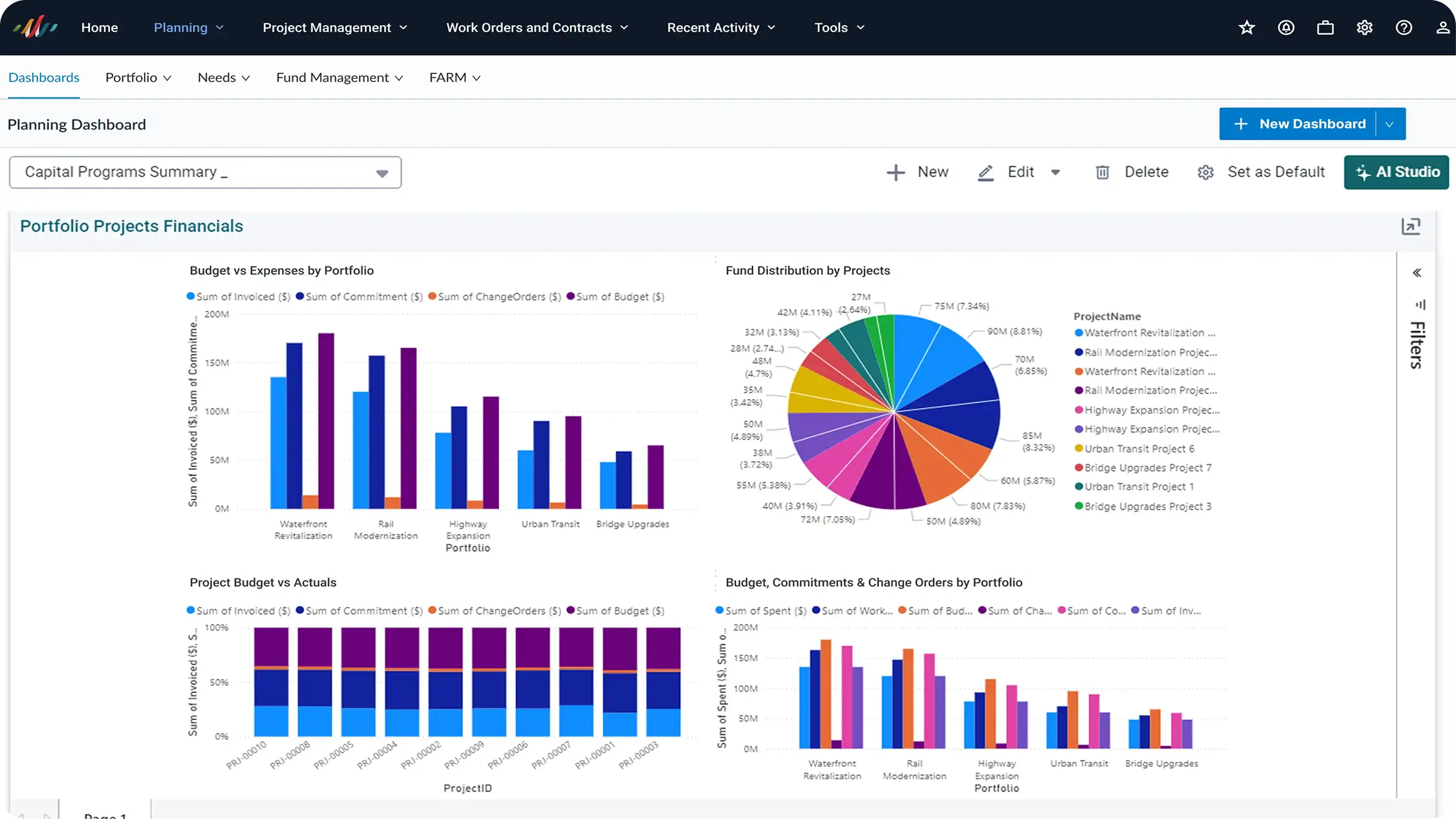
Scenario-test programs before a single dollar is committed
See your multiyear program in one place
Key features of Masterworks Capital Planning
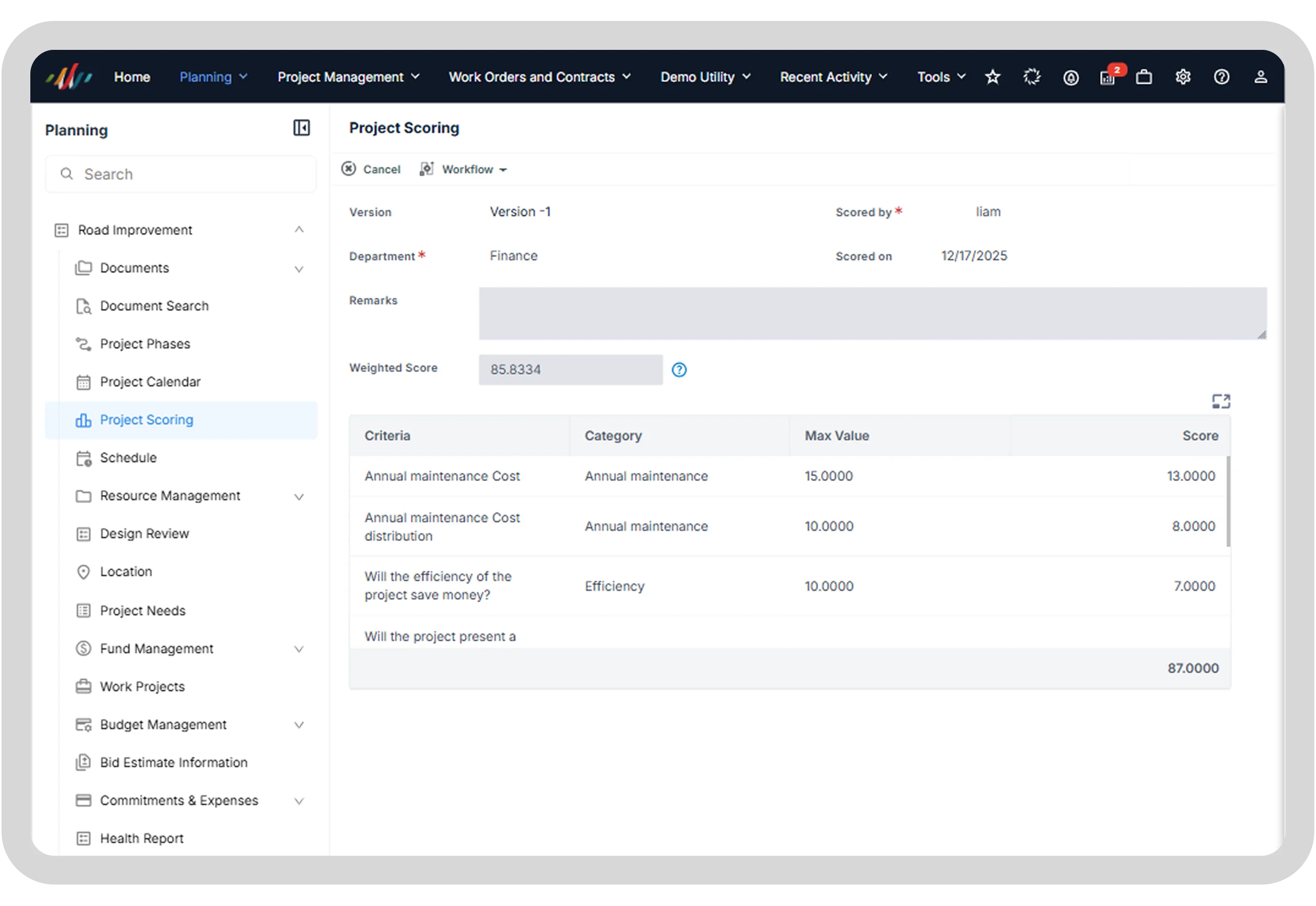
Identify and evaluate the right projects
Prioritize the projects that deliver the greatest public value. Capture project needs, evaluate opportunities, and rank projects using configurable scoring criteria.
Keep funding aligned throughout the program life cycle
Allocate multiple funding sources, track availability year over year, and stay compliant across grants, bonds, and appropriations.
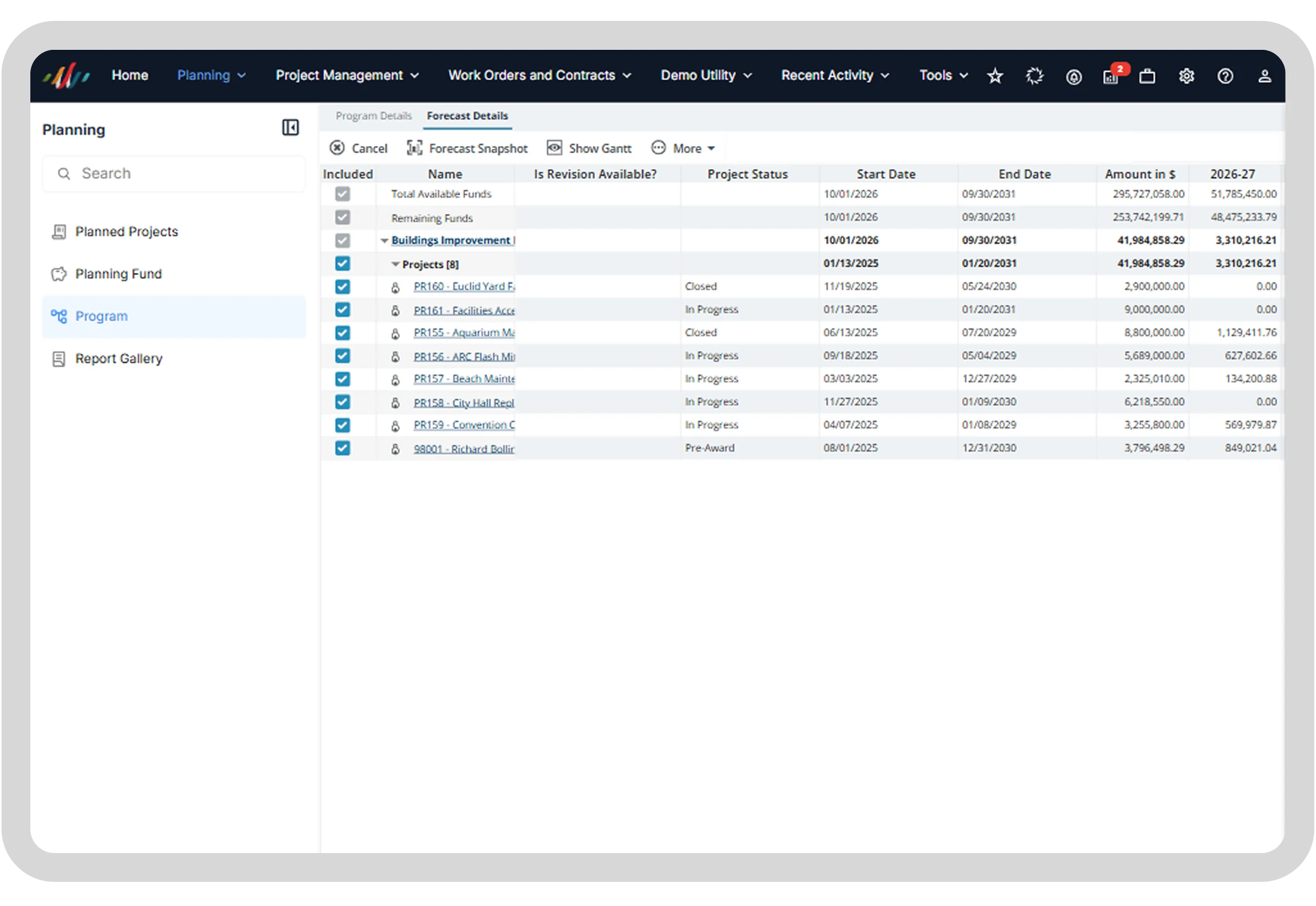
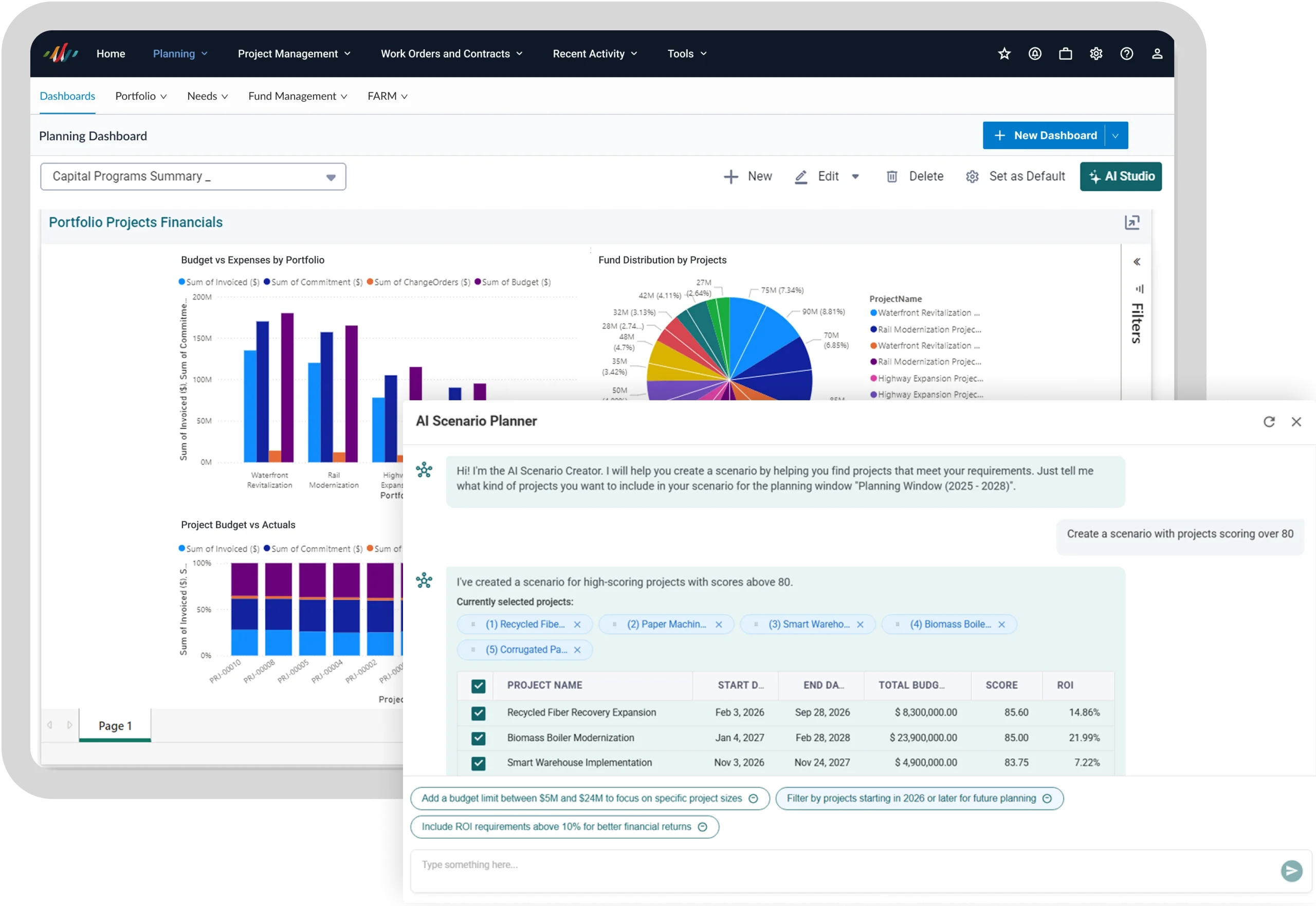
Build and compare multiple planning scenarios
Evaluate funding alternatives, understand trade-offs, and compare investment scenarios with AI, before committing resources.
Ensure planning decisions stay transparent and accountable
Streamline reviews, approvals, and budget revisions while maintaining a complete audit trail of every planning decision.
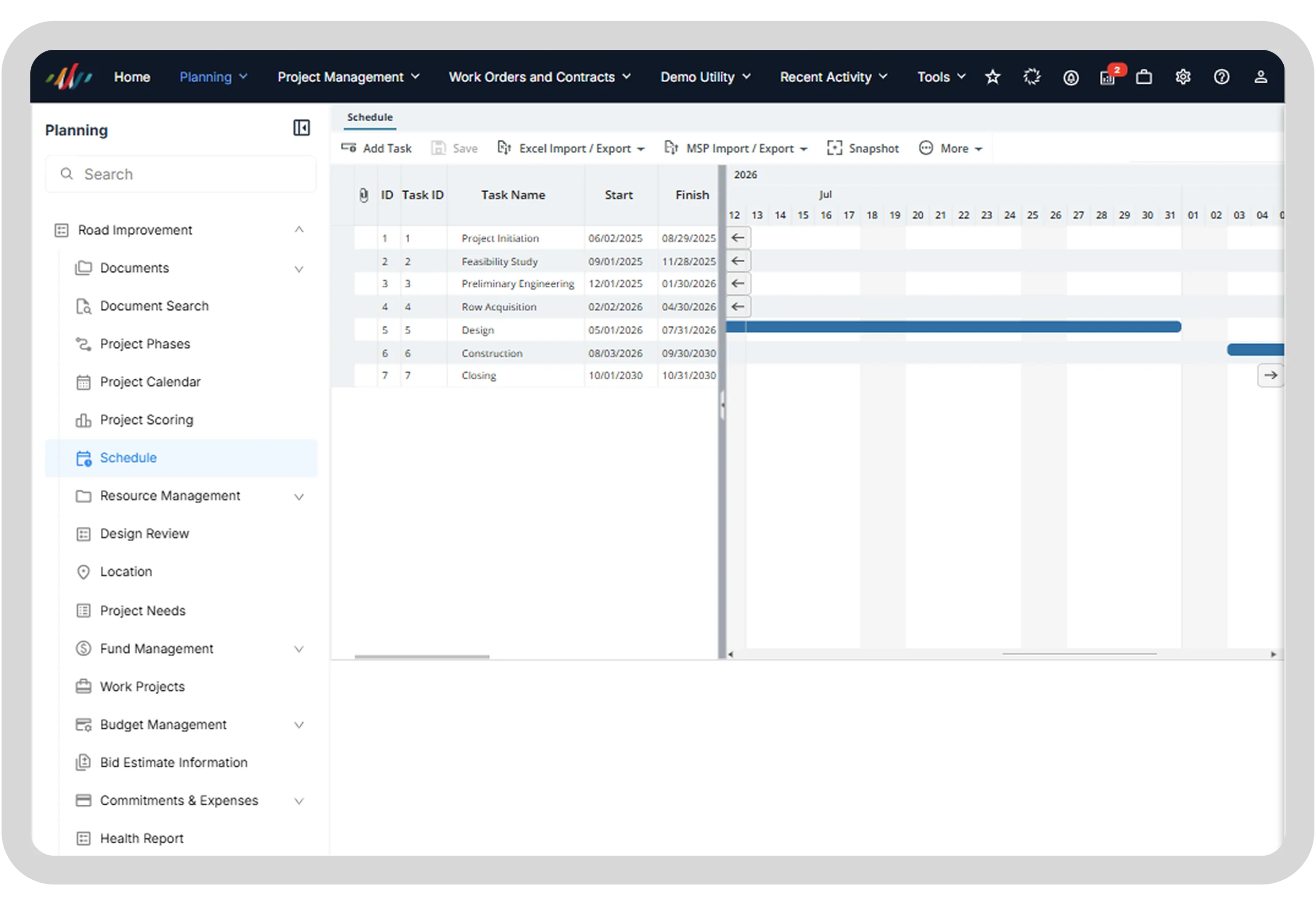
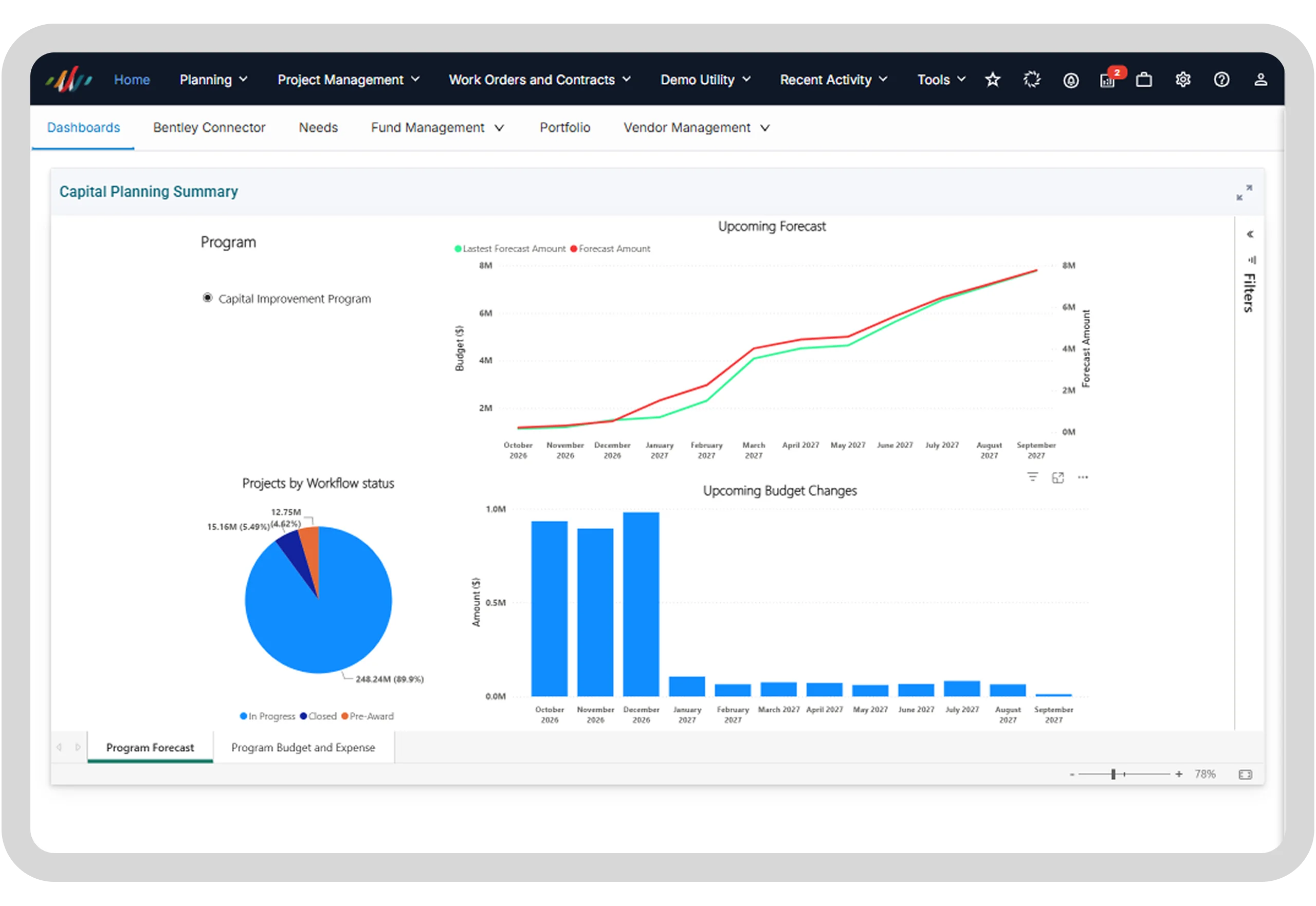
Model program financials with confidence
Forecast multiyear spend, generate cash-flow and S-curves, and pressure-test budgets with built-in financial algorithms, before you lock a plan.
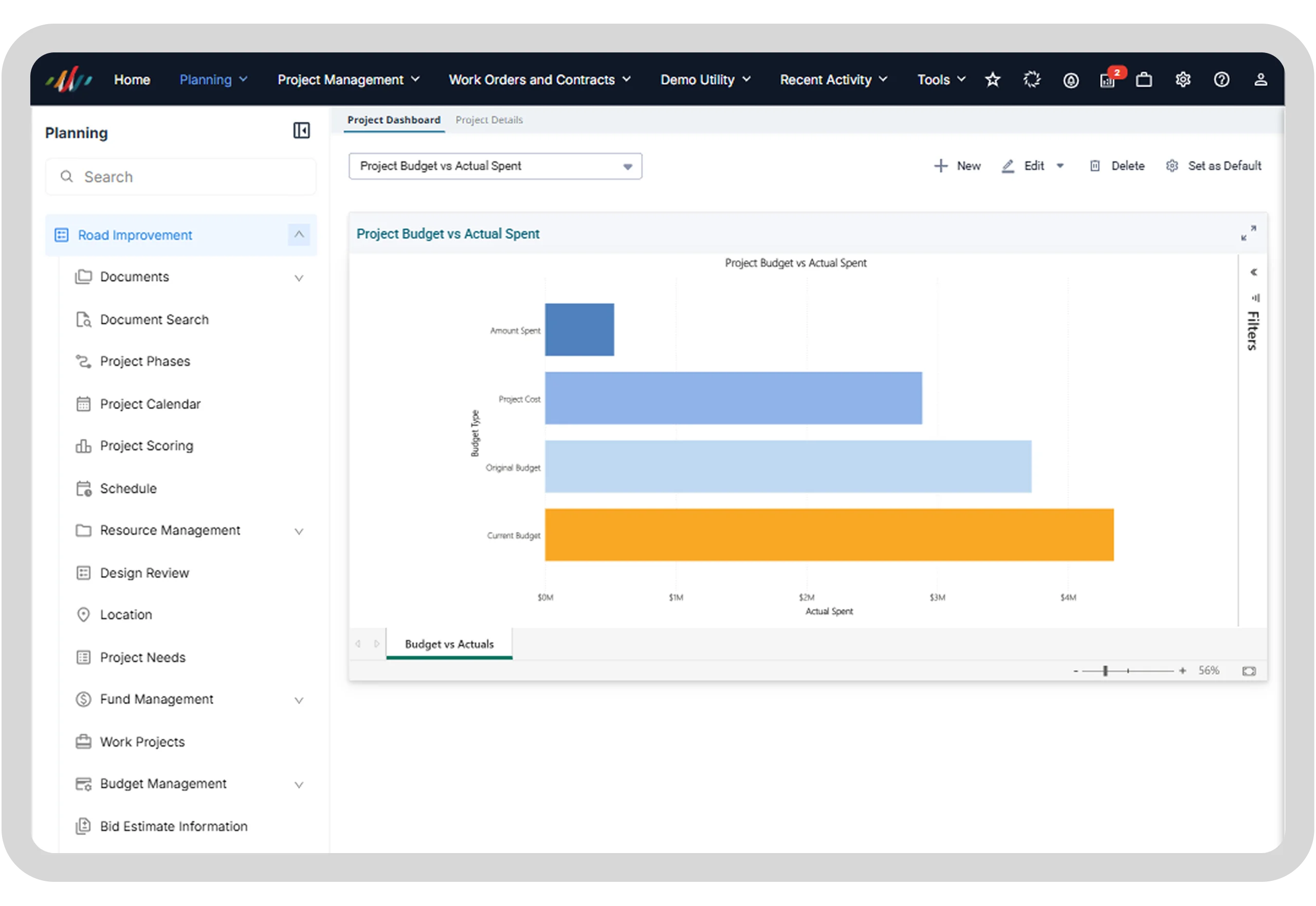
Seamlessly connect planning to execution
Align execution with approved budgets and keep capital plans updated with actuals and commitments through integration with Masterworks Build.
Integrate seamlessly across multiple platforms
You don’t have to change your legacy systems. Our products seamlessly integrate with over 100+ tools.

Integrate seamlessly across multiple platforms
You don’t have to change your legacy systems. Our products seamlessly integrate with over 100+ tools

Is Masterworks Capital Planning for you?
Masterworks Capital Planning helps government agencies confidently prioritize and manage long-term infrastructure funding amid uncertainty and growing scrutiny. It replaces siloed processes and tools with a centralized system for prioritization, scenario planning, and transparent capital decision-making.

Public agency leaders
Aurigo helps leaders balance competing priorities, funding constraints, and public accountability, providing clear insight into capital trade-offs, future obligations, and portfolio-level risk.
Finance and capital planning teams
Aurigo helps planning teams eliminate manual models and disconnected forecasts by centralizing project data, funding assumptions, and scenarios, so plans stay accurate, defensible, and aligned.

Trusted by 300+ customers | Grounded in 20+ years of capital program expertise
“Using Aurigo has transformed our federal capital programming and reimbursement process. The biggest benefit we’ve had is our ability to minimize manual data entry and increase accuracy.”
Kostandin Theodhori, Director of Federal Aid Programming & Reimbursement Office
MassDOT
Read case studyMassDOT



Frequently asked questions
How does Aurigo’s Capital Planning solution help us make better investment decisions with limited budgets?
Aurigo’s Capital Planning solution brings projects, costs, risks, and priorities into one system, so you can objectively score and rank funding. By comparing funding scenarios and trade-offs, leaders can direct limited capital to the projects that deliver the greatest impact.
We rely on spreadsheets today. Why move to Aurigo’s Capital Planning solution?
Spreadsheets are static, siloed, and hard to defend. Aurigo’s Capital Planning solution provides a single source of truth with built-in scenario planning, forecasting, and shared dashboards, reducing manual reconciliation and keeping finance, operations, and leadership aligned.
Can Aurigo Masterworks Capital Planning adapt when funding or priorities change mid-cycle?
Yes. In Masterworks Plan, you manage program budgets and funding in one place, so a mid-cycle change is an update, not a rebuild. Assign and reserve funds, transfer them between programs, projects, and reserves, and roll budgets up to parent programs. Cash-flow forecasts and S-curves show the impact before you commit, and every revision keeps an audit trail.
How does Aurigo’s Capital Planning solution help manage risk across multiyear programs?
Aurigo’s Capital Planning solution supports multiyear forecasting, inflation modeling, contingency planning, and what-if analysis. This helps agencies identify funding gaps, test risk scenarios, and de-risk capital programs before projects move into execution.
How do we justify and defend our capital budget to boards, funders, and the public?
Because every project is scored against transparent, consistent criteria, you get a repeatable, data-backed rationale for why each project ranks where it does. That turns capital budget requests from subjective, contested asks into defensible recommendations you can stand behind in front of elected boards, federal grantors, and the public.
Get in touch
Connect with us to scale up the potential of your programs