

Leadership Insight
The grid is setting the pace for data center growth
AI-driven data center growth is increasing pressure on power infrastructure, making grid readiness a critical factor in development timelines. This article explores how stronger coordination, connected planning, and scenario modeling can help data center owners and utilities align investments, respond faster to changing conditions, and reduce the risks created by power constraints.


For most of the last decade, a data center’s schedule was shaped by what could be built: steel, concrete, cooling systems, and fit-out. The shelf life of that logic is over. Today, the decisive question is simpler and harder: when will the power be there?
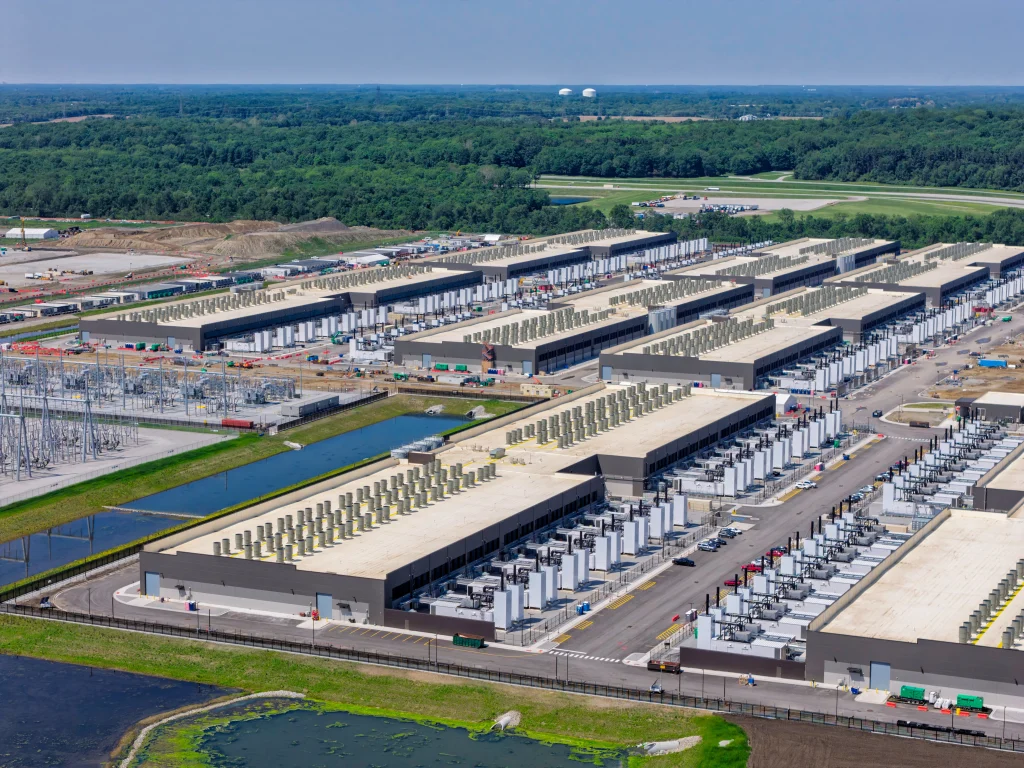
As AI-driven demand accelerates, the economics of digital infrastructure have changed faster than the grid built to support it. Data center developers can often design and construct a facility in two to three years, but interconnection studies, substation work, transmission upgrades, and local utility approvals can add years of waiting beyond the construction timeline. As a result, what looks like a construction program is now, just as fundamentally, an energy program.
Demand for energy from data centers is forecast to grow substantially. S&P Global forecasts that power demand from US data centers will rise to 108 GW in 2028 and 134.4 GW in 2030. The US Energy Information Administration projects that data center servers alone accounted for an estimated 7% of commercial sector electricity consumption in 2025 and could rise to 22% to 33% of commercial building electricity use by 2050 across its scenarios.
For utilities, that means preparing capital plans, resources, and infrastructure for a significant new load. For data center owners, it means development timelines are increasingly shaped by utility readiness as much as by land, permits, and construction. In practice, digital infrastructure demands speed, but power availability is setting the schedule.
The financial consequences of those delays can be significant. Hyperscale projects are often tied to firm delivery and customer commitments, which means a delay in power can also delay revenue and returns on invested capital. One industry estimate puts the combined impact of stranded financing costs, lost or deferred revenue, and contractual penalties at $30–150 million. In early 2025, Microsoft reportedly canceled about 200 MW of US data center leases, with facility and power delays cited as a justification in some cases. Speed to power is not just an operational consideration. It is increasingly a financial one.
Coordination as the operating model
Once power sets the pace, independent planning becomes harder for either side. Data center owners cannot assume utility capacity will be available when their construction plan says it should be. Utilities, equally, cannot rely on static load forecasts from customers whose project phasing, funding, or tenant commitments may change. Each side is exposed to the other’s timing assumptions.
For data center owners, a delayed substation or transmission upgrade can mean missed revenue windows, slower customer onboarding, or deferred returns on major capital commitments. For utilities, overstated demand forecasts or a campus that ramps more slowly than expected can leave infrastructure underutilized and create stranded-asset risk. It may also intensify concerns about who bears the cost of new infrastructure: utility ratepayers or the data center customer.
Faster, better decisions therefore depend on a clearer shared view of what is being built, when load is expected to materialize, and how schedule changes affect both sides. This matters early in the data center investment cycle. Owners increasingly need to understand power availability alongside land, water, tax incentives, permitting, construction cost, and market demand when comparing potential sites. A site that works well on most criteria may become less attractive if power cannot be delivered within the required commercial timeline.
The quicker owners can assess those dependencies, the quicker they can determine which opportunities deserve capital and which should be deferred or reconsidered. In that sense, coordination helps owners make investment decisions faster.
For utilities, the same issue appears at the portfolio level. They are balancing large-load requests against grid modernization, resilience programs, transmission upgrades, reliability needs, and other capital obligations. A decision to accelerate one program can affect the timing or resources available for another. Both sides, therefore, need a more structured way to align assumptions and adjust decisions as conditions change.
Technology makes coordination actionable
Technology can make that coordination more practical by giving data center owners and utilities better visibility into changing plans, helping them evaluate scenarios, and connecting planning decisions more closely with execution. It gives both sides a way to plan together by showing how changes in one organization’s decisions affect the other.
At the most basic level, both sides need visibility into the dependencies that affect their plans. A data center owner needs visibility into utility energization timing, transmission work, substation readiness, and procurement milestones. A utility needs greater confidence in how a data center will ramp up, whether projected load remains credible, and whether commercial or project assumptions have changed.
When data remains fragmented across spreadsheets, isolated systems, and disconnected teams, both parties are making capital decisions with only part of the picture. A more connected planning environment can expose those interdependencies earlier.
Scenario modeling allows utilities to test how changes in sequencing affect cost, capacity, reliability, risk, and other portfolio priorities. They can test what happens if an energization date moves by months or quarters, if a major load ramps more slowly than expected, or if another grid investment must be accelerated.
Data center owners can apply the same approach to site selection and capital allocation. Technology can bring power availability into the same evaluation as other investment criteria, allowing owners to compare sites more realistically and reduce the risk of advancing projects that cannot be energized within the required timeframe.
Technology also helps both sides keep those plans current. Energization dates, construction phasing, load forecasts, regulatory decisions, and utility priorities will continue to change. Static schedules struggle to accommodate that level of movement. Planning environments that connect changing assumptions to their downstream cost and schedule implications give decision-makers a clearer view of what those changes mean for the wider capital program.
Planning must also remain connected to execution. Actual schedule performance, project costs, commitments, and delivery conditions can inform future scenarios rather than remaining isolated inside project systems. Over time, that feedback can improve the assumptions used to evaluate the next site, utility investment, or infrastructure program.
Neither side needs another static plan. They need the ability to understand how their respective plans intersect and how a change on one side affects decisions on the other.
As digital infrastructure growth and grid investment become more tightly connected, organizations that build that visibility into their planning processes will be better positioned to make faster decisions, deploy capital more effectively, and adjust as conditions change. The grid may be writing the schedule, but better coordination can determine how effectively both industries respond to it.
About the author
Lewis is a Sales and GTM leader with roughly five years in enterprise SaaS sales, currently a Senior Account Executive for Aurigo’s private-sector business. He works with data centers, utilities, manufacturers, and life sciences companies to bring more discipline to large-scale capital programs, connecting long-range capital planning to actual project execution so investment decisions hold up under scrutiny. His background spans Bentley Systems and eSmart Systems, where he built account and regional sales experience across capital-intensive industries before moving into GTM leadership. At Aurigo, he focuses on reducing portfolio risk for private-sector owners and turning enterprise SaaS into measurable ROI, not just a line item.
You might like


Process improvement and cultural change: How to drive technology decisions that matter for your public agency
Learn more
About the author
Lewis is a Sales and GTM leader with roughly five years in enterprise SaaS sales, currently a Senior Account Executive for Aurigo’s private-sector business. He works with data centers, utilities, manufacturers, and life sciences companies to bring more discipline to large-scale capital programs, connecting long-range capital planning to actual project execution so investment decisions hold up under scrutiny.
His background spans Bentley Systems and eSmart Systems, where he built account and regional sales experience across capital-intensive industries before moving into GTM leadership. At Aurigo, he focuses on reducing portfolio risk for private-sector owners and turning enterprise SaaS into measurable ROI, not just a line item.
You might like