

Leadership insight
Addressing the equity gap in public infrastructure: Creating meaningful capital programs for all constituents
Closing the equity gap in public infrastructure requires inclusive planning, transparent prioritization, and data-driven decision-making. By aligning investments with community needs, agencies can deliver fairer outcomes and ensure infrastructure benefits all populations equitably.


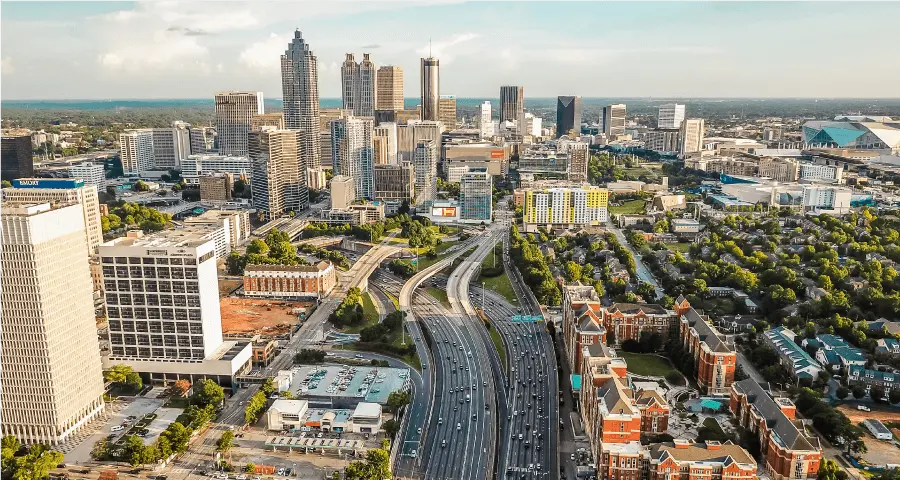
When we peel back the layers of American history, we find that infrastructure undertakings have disproportionately impacted marginalized communities. Take the U.S. Interstate Highway System, for instance. Built between the 1950s and the early 1990s, this mammoth project was constructed at an enormous social cost. Significant portions of the highway system were built through Black neighborhoods, causing lasting damage to residents. Over four decades, more than one million people were forced to
It wouldn’t be wrong to say that historic investments in public infrastructure have cut marginalized groups off from opportunities and, thus, perpetuated economic and racial injustices. Thankfully, there has been a shift for the better.
The government and public agencies today are making active reparations to communities of color. Regulations such as the Bipartisan Infrastructure Law are proactively bridging the equity gap and addressing economic disparities through critical public infrastructure investments.
Why is closing the equity gap in public infrastructure essential?
Equity gaps in America result from systemic racism and discrimination based on ethnicity, gender, socioeconomic differences, and other demographic traits. Such discrimination makes it more difficult for certain groups of people to succeed. Today, the racial and gender equity gap affects education, employment, healthcare, and housing prospects for disadvantaged groups. For instance, people of color are less likely to be hired for jobs or promoted to leadership positions. This perpetuates a vicious cycle of disempowerment. Hence, public agencies must consciously frame policies that accommodate the needs of such marginalized groups.
In most communities, public infrastructure projects are major economic drivers. Beyond job creation, equitable public infrastructure expansion holds immense potential to reduce inequities in assets, income, and wealth for marginalized communities. However, bridging the equity gap is not a job for the free markets. Public agencies must make concerted efforts to address the interests of economically underserved populations.
What are the challenges to closing the equity gap?
Lack of community engagement
It is vital to get the input from constituents early in the planning process. But most often, poor communities and marginalized groups get excluded, as they may not have proper representation, and their voices are therefore not heard in decision-making. Due to the equity gap, these communities also lack the resources, influence, or political power to advocate for inclusion in the planning process. Communities that have faced historical discrimination or neglect also get excluded due to long-standing patterns of inequality in resource allocation and infrastructure development. For instance, in the mid-20th century, the Interstate Highway System was intentionally built through less affluent neighborhoods populated by predominantly Black, Latino, and other communities of color. The affected communities were rarely consulted or engaged before development projects were launched.
Bridging the equity gap, thus, rests on decisions that take the needs of local communities into account.
Lack of access to information
When crucial project information, such as timelines and plans, is not easily accessible to the public, building public infrastructure becomes less transparent. Closely tied to information dissemination is the concept of ‘digital equity,’ i.e., equal access to digital technologies, such as the Internet and broadband, to level the playing field in education, work, and society. In 2018, over 30% of the homes in 185 big cities in the United States did not have a wireline broadband connection.
Due to a persistent digital equity gap, marginalized communities often find themselves out of the loop, and their viewpoints are left out of crucial discussions. After the pandemic, broadband access to high-speed internet became more critical than ever to study, work, and socialize. However, access remains inequitable. Black and Latino families are 9% and 15% less likely to have high-speed internet, respectively.
Due to the pandemic, minority groups underwent significant displacement, with several members of these communities moving across the country. Black and Latino workers faced the highest job displacement numbers during COVID-19; Latino workers accounted for one out of four displaced workers without unemployment insurance benefits despite representing only one out of six employed workers. This movement disrupted established social networks and weakened community ties, making it harder for minorities to access information about community infrastructure projects.
Difficulty in procuring funding
If the concerns of the community are not discussed at the capital planning stage, it will be difficult to make additions to the project and secure funding later. To close racial equity gaps, capital planning should be done with complete and transparent public involvement, with care taken to address the needs of marginalized communities. For capital improvement program owners, procuring funding remains a key challenge in building equitable public infrastructure. To make the most of available budgets, they must pick the right projects and have all stakeholders on the same page.
An efficient capital planning tool can help owners put budgets to the best use through a centralized planning process that takes into account priorities, costs, risks, and community feedback.
How do we achieve equity in capital infrastructure construction?
Inclusive planning involving diverse constituents is the first step to ensuring that infrastructure projects address all communities’ specific concerns and needs, making data-driven decision-making the cornerstone of inclusivity. At all stages of the capital program, it is essential to ensure that the affected residents have access to critical services and amenities. For example, local governments can provide affordable housing options to ensure equitable access to stable housing while minimizing displacement. Owners should regularly assess the impact of their infrastructure projects on their equity and resilience goals. Any disparities or shortcomings must be addressed immediately.
Masterworks Community Engagement provides a novel approach to closing the equity gap in the construction industry through its strategic application of Artificial Intelligence (AI). By leveraging AI, it facilitates the analysis of data collected directly from the communities affected by infrastructure projects. It ensures that the voices of marginalized populations are heard and considered during the planning and implementation phases. Providing an inclusive and accessible platform for public engagement empowers communities to have a say in shaping infrastructure development, ultimately leading to more equitable and well-informed decisions. Through its commitment to enhancing public participation, Masterworks Community Engagement plays a pivotal role in advancing equity, prioritizing the needs and concerns of all community members, and fostering a more inclusive system.
About the author
Jennifer Cohan brings extensive public sector leadership experience, having served as Director of the Delaware Department of Transportation and as Industry Lead, Transportation at Aurigo, where she contributed to advancing infrastructure program strategy and delivery.
You might like


About the author
Jennifer Cohan brings extensive public sector leadership experience, having served as Director of the Delaware Department of Transportation and as Industry Lead, Transportation at Aurigo, where she contributed to advancing infrastructure program strategy and delivery.