
Guide
Introduction
The long-awaited Infrastructure Investment and Jobs Act (IIJA) will provide much-needed funding to address the deteriorating infrastructure across the United States. In 2021, the American Society of Civil Engineers graded the U.S. infrastructure as a C-, a potentially dire situation for the future of our country’s roadways, waterways, airports, and seaports.
In addition, the Environmental Protection Agency (EPA) reports that while great strides have been made in reducing pollution, many areas in the United States exceed national air quality standards. And with six to ten million lead service lines still in use across the country, many Americans do not have access to safe drinking water.
On November 15th, 2021, President Joe Biden signed into law House Bill H.R. 3684, otherwise known as the Infrastructure Investment and Jobs Act (IIJA). According to The White House, the bill addresses the provisions required for federal-aid highway, transit, highway safety, motor carrier, research, hazardous materials, and rail programs of the Department of Transportation (DOT).
An overview: Infrastructure Investment and Jobs Act
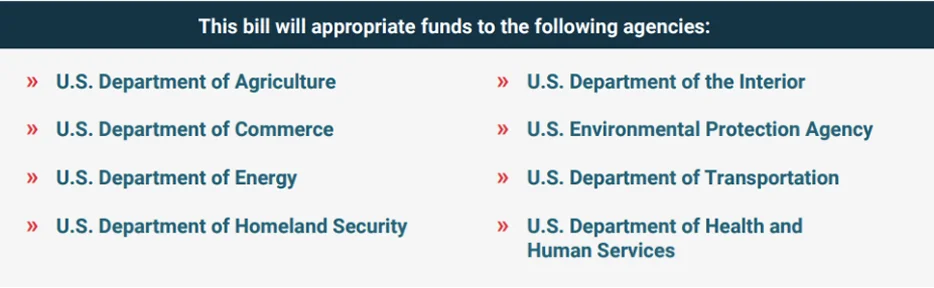
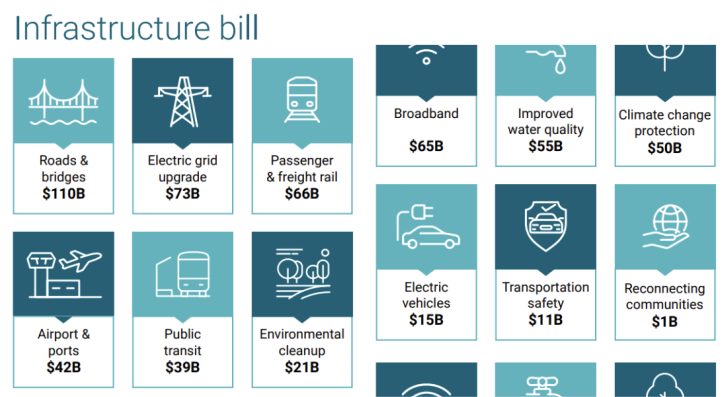
The IIJA will provide $973 billion over the next five years (the fiscal years 2022–2026) to fund a multitude of old and new programs to improve water, transportation, energy, environmental remediation, public lands, broadband, and more.
Clean air, clean drinking water, and environmental justice for communities that have been left behind are part of a more extensive initiative to improve health and security across America. This bill is the first step on the path to the future.
Highlights: Water, energy, and environmental sectors
America’s water network of pipes is aging. While the pipes are 45 years old on average, some are nearly a century old. And according to the ASCE Infrastructure Report Card, there is a water main break every two minutes in the U.S., which accounts for nearly six billion gallons of treated water lost each day. Billions of dollars will be spent to clean up and ensure a safe future for the country’s water system. The funding in the IIJA will help replace the failing water infrastructure, remove lead service lines, and address emerging contaminants such as per- and polyfluoroalkyl substances (PFAS) for drinking water, stormwater, and wastewater. Additionally, according to a recent EPA study, about “14% to 18% of total daily treated potable water in the United States is lost through leaks, with some water systems reporting water-loss rates exceeding 60%.”
In what’s been called a ‘big win’ for the country’s aging power grid, the IIJA will invest in improving the nation’s power infrastructure and addressing legacy pollution issues. In addition to the needed funding to address the existing problems, provisions outlined in the bill will also modernize the current regulatory system to help speed up projects to mitigate climate change and support a competitive global economy.
Water and utilities
- $11.7 billion will be dispersed for each program, the Clean Water State Revolving Fund (CWSRF) and the Drinking Water State Revolving Fund (DWSRF), over five years.
- $20 billion will address water contaminants through grants dispersed over five years to remove lead from water by replacing water lines, as well as addressing new contaminants and PFAS.
- $1.9 billion will be used for protected regional waters to ensure the nation’s waterways are preserved and serve as economic and recreational assets.
Environmental
- $21 billion will be invested towards environmental remediation to address legacy pollution that harms America’s public health.
- $3.5 billion will be utilized over five years for flood mitigation grants.
- $1.2 billion will be made available over five years for grants to eligible Brownfield projects.
Energy
- $5 billion will be allocated to a new competitive grant program over five years to enhance the resilience of the electric grid.
- $3.5 billion will be distributed to the Weatherization Assistance Program in 2022 to improve energy efficiency for low-income households.
- $3 billion will be available through the Strengthening Mobility and Revolutionizing Transportation (SMART) Grant Program to enhance smart community technologies.
- $500 million will be allocated over five years for public schools to improve energy efficiencies.
- Furthermore, $42.5 billion in 2022 will be allocated to increase accessibility and equality of broadband through the Broadband Equity, Access, and Deployment Program. An additional $2 billion in competitive grants will be available to develop and deploy accessible broadband programs.
Equity and the IIJA
According to the EPA, millions of lead service lines are still in use across the country, most of which are in communities of color and low-income areas. According to recent studies by the EPA, $473 billion would need to be invested in updating water system infrastructure over the next 20 years to ensure safe drinking water for all. An additional $271 billion investment in the country’s wastewater treatment facilities is required to meet federal water quality objectives. The IIJA has allocated $50 billion for water and wastewater infrastructure, setting the country on a path to fix many infrastructure issues and update old service lines. Additionally, 49% of these funds must be used in disadvantaged or low-income communities.
More than one in four Black and Hispanic Americans live within three miles of a Superfund site. With 40,000 Superfund sites designated by the EPA as areas contaminated with hazardous substances to investigate and cleanup sites, the $3.5 billion set aside in the IIJA will assist these affected areas in receiving the protection and cleanup they require. The new funding from the bill will allow the EPA to tackle the backlog of sites that need immediate attention, beginning with projects at 49 locations in 24 states and territories.
An additional $1.5 billion will go towards Brownfield revitalization. Brownfield land is any previously developed land not currently in use and may be potentially contaminated. Typically, these sites were once used for industrial or commercial purposes with known or suspected pollution. The IIJA funds will be used to assess, clean up, and make these sites ready for use again, creating new opportunities for many communities.
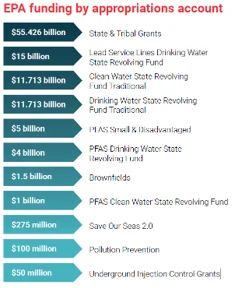
The EPA funding sees the IIJA as a historic step in the path toward providing safe and healthy communities to all Americans: “ Because of the investments in the Bipartisan Infrastructure Law, millions of American families will no longer have to fear the harmful health effects caused by lead and other pollutants in their water. People will be protected from PFAS or ‘forever chemical’ contamination.” Access to clean water will help Americans in these communities live a healthier lifestyle. Nearly $12 billion is allocated for the Clean Water State Revolving Fund to help provide clean water to many communities.
While the entire nation feels the effects of climate change, communities of color are more likely to live in the areas most vulnerable to flooding and other weather events related to climate change. Funding from the IIJA makes our communities safer and our infrastructure more resilient to the impacts of climate change with an investment of over $50 billion to protect against droughts, heat, floods, and wildfires, in addition to a significant investment in weatherization.
Another step toward equity in disinvested communities is the funding laid out in the IIJA for broadband accessibility. The $42.5 billion investment is the largest this country has seen in access to universal broadband. Bringing affordable access to robust broadband will anchor hospitals, schools, and government buildings while introducing many Americans to new productivity, efficiency, and creativity methods.
Rather than the Federal Communications Commission (FCC) managing this program, the states have the decision-making power through oversight provided by the Commerce Department’s National Telecommunications and Information Administration (NTIA). This monumental funding will likely require states to build up their broadband offices or councils to meet the demands of the task at hand, and collaboration within State Departments will save agencies valuable time and dollars, as the following section will explain.
You can see examples of these funds already being put to use. For example, the Vermont Community Broadband Board has designated a $116 million grant program for eligible providers to accelerate construction efforts to reach all Vermonters currently without adequate broadband service.
Sustainability and the IIJA
The IIJA establishes a Rural and Low-Income Water Assistance Pilot Program intended to aid eligible households in maintaining access to drinking water and wastewater services. These funds will be added to existing affordability and bill assistance programs through “direct financial assistance, a lifeline rate, bill discounting, special hardship provisions, a percentage-of-income payment plan, or debt relief for eligible[entities].” Utility and wastewater management organizations will need to consider long-term sustainability and affordability as these new funds are allocated.
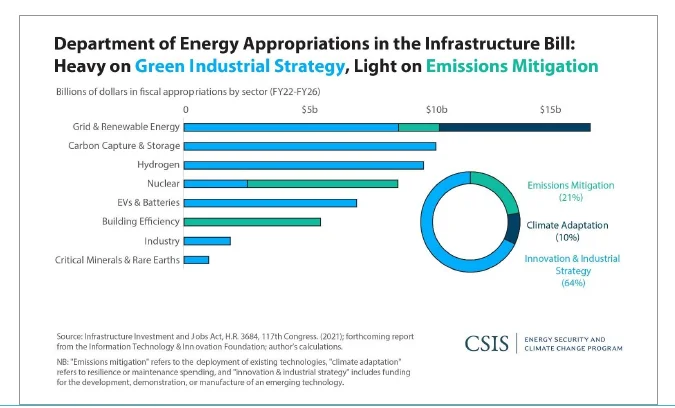
Reducing energy demands is the overarching theme of many of the programs laid out in the IIJA. This bill introduces the largest investment to date in clean energy transmission and grid infrastructure in American history. The Energy Infrastructure Act includes funds for grid reliability, resiliency, and support for a Grid Deployment Authority. It also funds the sourcing of critical minerals and supply chains for clean energy technology such as carbon capture, hydrogen, and direct air capture to achieve energy efficiency. Furthermore, $8 billion will support at least four “regional clean hydrogen hubs” to be located in different regions and will demonstrate distinct technologies and end uses.
Minimizing energy demands through the use of various programs will help us take steps toward sustainability and equity. For example, the Weatherization Assistance Program is designed to help low-income citizens save energy and reduce expenses by installing energy conservation materials and implementing energy efficient measures in their homes. The goal of the program is to create a safe, energy-efficient, and comfortable home environment for the families served.
Collaboration and the IIJA
It has never been more critical for collaboration among internal and public stakeholders. In part, disinvested communities came to be because of the lack of communication with the public and the ease of right of way land purchase. The success of the projects over the next several years will rely on two key factors:
Communication with the public
Public engagement should be at the forefront of any project that will impact a community. The American Road & Transportation Builders Association estimates that the money allocated for just the transportation sector will add $488 billion to the U.S. GDP by 2027. With so much on the line for the American citizens, public feedback can help shape projects for the betterment of all.
Collaboration with internal stakeholders
Consistent processes, a single source of the truth, and digitization of processes will ensure that your projects stay on track. As outlined in the next section, the IIJA explicitly sets money aside for technology for this sole purpose.
Interorganizational communication will play a prominent role in successfully launching projects. With so many projects ranging from water to roads being undertaken, builds and digs (e.g., road, water, sewer, gas, electric, etc.) involving the right of way can save both time and money.
IIJA and technology
All eyes are on the construction industry leading into 2022. Investment in technology, security, and a skilled workforce ahead of the flurry of projects will prepare an agency for success. Workforce shortages are at an all-time high, with the Associated General Contractors (ACG) reporting that 89% of contractors are having difficulty finding labor.
This is why the IIJA will also direct $100 million over five years for advanced digital construction management systems and related technologies. These funds will be used to work towards the goal of maximizing interoperability among systems, products, tools, or applications, boosting productivity, reducing project delays and cost overruns, and enhancing safety and quality. McKinsey estimates if contractors more widely used these technologies, construction productivity would increase by 14% to 15%, while the construction costs would decrease by 4% to 6%. Therefore, the $100 million devoted to construction technologies is equally as important as the actual project funding by ensuring that the money allocated is used timely and accurately.
The IIJA aims to accelerate technology adoption for public agencies by providing funding specifically to promote, implement, deploy, demonstrate, showcase, support, and document the application of advanced digital construction management systems, practices, performance, and benefits. Adding the additional funding to new and existing technology systems will help agencies better prioritize, manage, and maintain the budgets and onset of projects over the next several years.
This technology will also help contractors increase productivity and transparency.With new regulations regarding project reporting, the government can easily trackhow funds are being allocated and ensure efficiency. As highlighted in the IIJA, thetechnology funding should be used to:
-
- Accelerate state adoption of advanced digital construction management systems
applied throughout the construction lifecycle (including through the design and
engineering, construction, and operations phases). - Provide more timely and productive information-sharing among stakeholders through reduced reliance on paper to manage construction processes and deliverables.
- Deploy digital management systems that enable and leverage digital technologies used by contractors on construction sites. These could range from state-of-the-art automated and connected machinery to optimized routing software that allows construction workers to perform tasks faster, safer, more accurately, and with minimal supervision.
- Provide technology training and workforce development to increase the capabilities of project managers and sponsors who work with state and local government units.
- Reduce the environmental footprint of construction projects using advanced digital construction management systems resulting in the elimination of congestion through more efficient projects.
- Accelerate state adoption of advanced digital construction management systems
While the construction industry makes up 13% of global GDP, productivity growth has only reached 1% annually, according to McKinsey, due to a lack of technology adoption. Implementing connected construction technology can help the country achieve the ambitious goals (and expectations) set forth by improving coordination and project management. IIJA provides an investment of $621 billion for modernizing roads, bridges, and highways and aims to build 500,000 EV charging stations nationwide by 2030. Moreover, by streamlining delivery through the use of technology, the industry can save up to $400 billion annually.
There is a lot on the line for the construction industry as we embark on this monumental infusion of funding to the U.S. infrastructure. Embracing technology is more important than ever to help streamline projects and communication as well as prioritize and optimize projects. McKinsey states that “governments must move beyond a project-by-project view and upgrade systems for planning, operating, and delivering infrastructure.”