

Introduction
Whether you manage a multibillion-dollar capital program for a state DOT or lead a million-dollar renovation for your local agency, you will invariably need public feedback on your capital plans and infrastructure projects. You will improve project design and expected performance by gathering public input at the outset of a program or project. The earlier you gain feedback, the better off your organization will be. But how is your agency currently managing public engagement? During the ongoing COVID-19 pandemic, your strategy combines Zoom meetings, brochures, and website information.
You must provide the public with balanced, objective information to help them understand the challenges at hand, the available options, and the solutions. This would, in turn, help you get your plans approved on time. Oftentimes, you also need stakeholder feedback and public approval to advance or modify your projects.
Public engagement process
Your constituents’ feedback will influence your project, so it’s important to have a solid engagement process in place from the planning phase onward. Different project types will require different levels of public engagement.
During the planning phase of your project, key questions need to be addressed, such as who the project will affect, how their feedback will inform the decision-making process, and what type of engagement you are seeking from your stakeholders. Once your government agencies have determined which community members and/or organizations must be reached, you can determine the best way to communicate and the desired timeline.
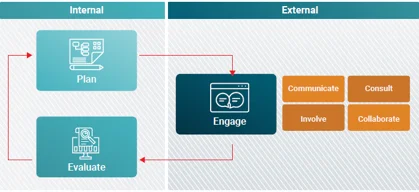
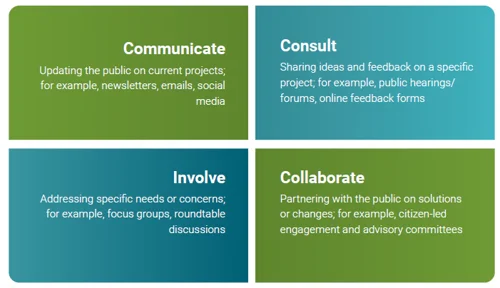
At a high level, government agencies typically bucket their levels of engagement into the following:
Before running any engagement campaign, it’s important to consider how you will record and analyze the feedback you receive. Once you’ve compiled all your data, it’s time to analyze it to see how the feedback may affect your project. Plan to update the public on the responses received and how their feedback will inform the upcoming project.
Current options for public engagement tools are designed to help you collect feedback for a specific project. These solutions let you name your project, send a survey, gather feedback from your website, and view all comments in a spreadsheet or an online report. These tools are not designed for the public commenting process of capital programs that contain tens to thousands of individual projects and require public feedback before the capital plans can be approved. The review process can take weeks to sort through, which ultimately slows down your entire program. Brochures, newsletters, and fact sheets are costly, hard to distribute, and are often overlooked. The response to phone surveys, radio ads, and town hall meetings is hard to predict.
Outlined below are common challenges encountered during the public engagement process and how investing in a public engagement platform can help ease, and in some cases even eliminate, these tedious problems.
Quality (or the lack) of engagement
When you’re seeking input on a multiyear capital program, the public often wants to comment on a particular project or piece of your program, in addition to the overall priorities laid out in your plan. Your agency will end up with large volumes of public feedback, often in disorganized form. Or, on the flip side, you may end up with not enough feedback due to the lack of information reaching the public.
Solution: Share the vital information the public needs to know, allow them to review your capital programs, and share feedback in one online location. Users can easily search and comment on proposed projects relevant to their location using a map-based public portal.
Limited audience reach
Traditional ways of communicating with the community often don’t reach the intended audience. Brochures go unnoticed, meetings are unknown, and it’s easy to miss notices of upcoming public forums.
Solution: Go digital and connect with a larger audience. Your public wants to connect with you. Leverage all-in-one solutions with integrated social tools to get the most engagement. Additionally, you can design feedback campaigns that enable you to send and promote surveys to ask for feedback from a broader set of constituents or import comments you collect from other sources.
Slow dissemination of information to the public
Brochures, organizing public forums, and other traditional ways of sharing information with your constituents can take significant time to organize, prepare, and send to the community, slowing down the entire process. This is a huge hindrance as every day counts when preparing to begin a public project.
Solution: Moving your public engagement online will allow for the easy setup of your capital program with all the necessary data for the public to consume. With the click of a button, the public can access information on a map that allows them to assess the proposed projects in a meaningful way to themselves and their existing neighborhood.
Slow and cumbersome review of feedback
In most agencies, reviewing public feedback is a manual process that can take someone anywhere from one week to a month to scan and evaluate all the comments that you receive from the public. Simple survey tools and online portals allow you to collect public comments for an individual project, but then dump all the comments into an Excel file for manual review.
Solution: Look for a public engagement system designed with built-in Artificial Intelligence (AI) to collect feedback early in the capital planning process and to review every comment for you, instantly cataloging each comment and measuring the sentiment of each participant. This technology is called sentiment analysis or emotion AI.
In its simplest terms, sentiment analysis uses technology to review your data for positive, negative, or neutral tones. It can also scan for emotional feedback such as happiness, frustration, anger, and so on, and then automatically weigh feedback in an easy-to-read format for your team. These systems can also gauge the severity of the language being analyzed. Using sentiment analysis to analyze public feedback will eliminate considerable time spent processing and understanding the data, provide real-time analysis, and ensure the data you get back for each project is consistent.
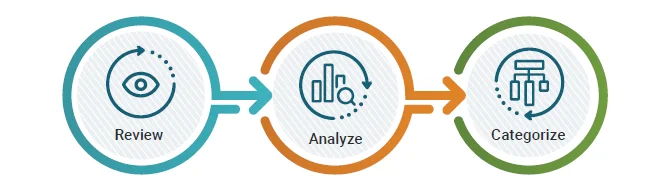
This cutting-edge technology will review, analyze, and instantly categorize comments for you based on each comment’s sentiment and feedback. A real-time dashboard and reporting system will show you comments, regional distribution, public rating scores, comment disposition, and more for each project and campaign.
In the age of technology, public engagement should be more precise, concise, and, most importantly, user-friendly.
Final thoughts
Masterworks Community Engagement is an all-in-one, secure, cloud-based platform that helps government agencies streamline public involvement in capital planning and gather more meaningful constituent input. With built-in AI-based sentiment analysis, the platform instantly detects themes, tone, and emotions in feedback, empowering agencies to understand community needs better and make informed decisions. It enables agencies to track their public involvement process and streamline FHWA reporting for capital planning and compliance reviews, saving time and improving accuracy. Teams can collect input more efficiently, reducing processing time by up to 50% across all project stages.
Designed for inclusivity, Masterworks Community Engagement promotes equal participation by capturing feedback from older adults, individuals with disabilities, and multilingual communities. It is fully ADA-compliant and meets all government agency security standards, including SOC 2, FISMA, FedRAMP, and WCAG 2.0. As a 100% cloud-based solution, it requires no software or hardware installation and offers a user-friendly experience for both agency staff and the communities they serve.
