
Blog
How public agencies can optimize their capital planning process with what-if analysis
Traditional capital planning models are failing modern manufacturing leaders amid cost volatility, utility delays, labor shortages, and fragmented data. AI-powered portfolio planning enables manufacturers to model scenarios, manage risk, and align capital investments with long-term strategic growth.


When multiyear capital infrastructure programs are underway, it becomes difficult to predict future outcomes. Yet, by understanding the potential impact of different variables, capital owners can make better decisions about allocating resources and mitigating risk. Unexpected changes in crucial cost drivers can significantly impact construction programs. Consider a situation in which a new highway construction project is underway alongside another concurrent project, such as bridge maintenance or the replacement of a water utility line. How would you determine the priority order for these projects? How would you evaluate whether the project timelines could result in conflicts or affect each other?
The answer is what-if analysis.
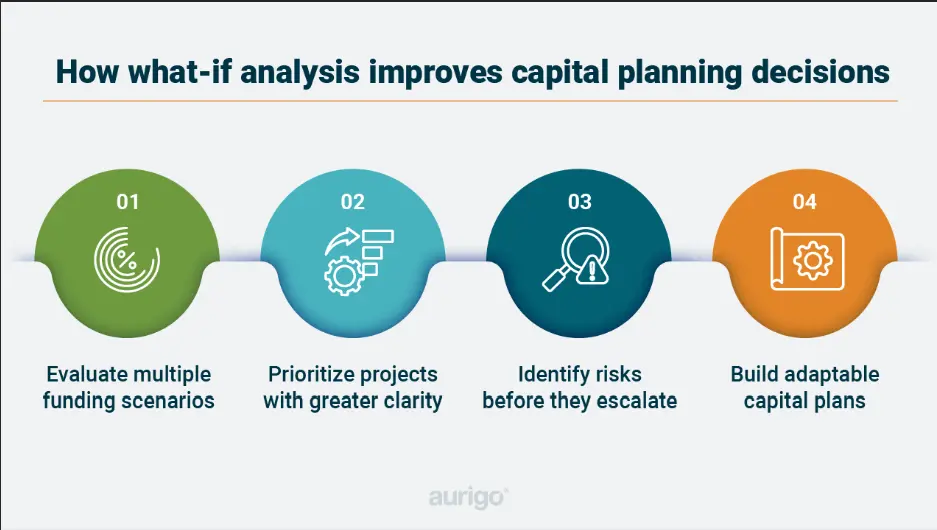
What-if analysis, also called strategic scenario planning, is essential to optimizing the continuous capital planning process.
It involves two steps:
- Brainstorming and analyzing different future possibilities
- Evaluating the implications of those future possibilities for an infrastructure program
Types of what-if analysis
Project prioritization analysis
Project prioritization is a type of what-if analysis that lets owners identify the projects that will impact their organization the most so that they can ensure the efficient allocation of resources. With multiple long-term projects, owners can use what-if analysis to identify and rank projects by importance, urgency, and the degree to which each change may affect the organization.
Suppose you have a program with a hundred different projects in a particular fiscal year. These projects are already prioritized based on their rankings, and now the owner must ensure that available budgetary funds are optimally utilized. Since a single project can use funds from multiple sources, analyzing each project’s funding requirements and availability is essential. The owner will have a list of priority projects based on rankings and fund analysis. This list creates a clear picture, which helps the owner schedule a project ahead of or behind the timeline as required based on the results of the what-if analysis.
Cost or cash flow optimization
Cost or cash flow optimization enables public agencies to understand the correlation between cost and value across scenarios and choose the one with the highest business value. For example, when a public agency reviews a multiyear infrastructure program to be taken up for the fiscal year, it can perform a cashflow what-if analysis to identify and eliminate unnecessary expenses without sacrificing quality or functionality. This can be achieved by creating multiple cash flow scenarios.
Owners can quickly create a high-level project budget and apply predefined cash flow distribution curves (Bell, Front loaded, Back loaded, etc.). Multiple cash flow scenarios can be created for the budget estimate. If one budget does not yield the required results, several budgets can be made for the project, each with its own cash flow scenario. The owner can analyze its impacts with available funds using different scenarios and choose the plan that best suits the organization’s strategic goals.
Resource or capacity planning
Resource or capacity planning entails assessing how the distribution of resources in one project can impact other concurrent projects. It focuses on ensuring that essential resources, including equipment and skilled personnel, are available at the right time. If critical resources are exclusively allocated to one project, it can lead to delays or the inability to commence other projects. It is crucial to consider interdependencies between projects. Conducting resource and capacity what-if analyses helps identify limitations and prioritize projects, promoting informed resource allocation.
Ad hoc scenario planning
Ad hoc scenario planning is a type of scenario planning that addresses unforeseen events. In construction management, ad hoc scenario planning helps owners identify and assess risks, develop contingency plans, and improve decision-making. For example, public agencies can consider the risks associated with infrastructure projects, such as changes in regulatory requirements. They can also develop contingency plans to mitigate these risks.
Conclusion
Masterworks Capital Planning software provides what-if analysis capability, serving as an intelligent tool for owners responsible for delivering capital programs to meet their community needs. It empowers them to navigate uncertainty, optimize resource allocation, and respond effectively to unexpected challenges, enhancing project prioritization by leveraging scenario-based planning. With such strategic tools at their disposal, they can steer their infrastructure projects toward success while minimizing disruptions and improving overall project outcomes.
You might like
Frequently asked questions
What is what-if analysis in construction?
What-if analysis, scenario analysis, or strategic scenario planning is the analysis of different possible futures and their consequences for a construction program.
What are the benefits of what-if analysis in construction capital planning?
Key benefits of using what-if analysis in construction capital planning include:
- Improved decision-making
- Better resource allocation
- Improved risk management
- Budget overrun prevention
- Reduced project delays
- Better usage of contingency budget