
Blog
AI-powered predictive analytics: Preventing construction disputes before they begin
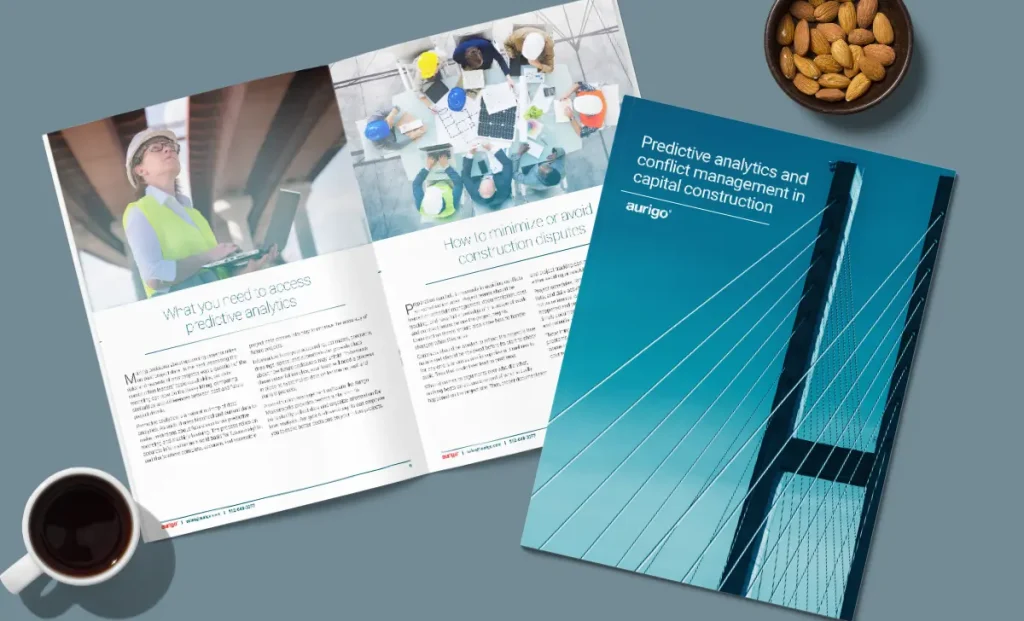
AI-powered predictive analytics is shifting construction dispute management from reactive resolution to proactive prevention. By identifying risk signals early and enabling data-driven interventions, organizations can reduce conflicts, protect project timelines, and improve collaboration across complex construction programs.


Construction projects involve multiple stakeholders, tight timelines, and evolving regulations, which makes them inherently complex. Even a minor misunderstanding can escalate into a costly dispute. In 2025, the average value of construction disputes in North America surged by 40% to about $60 million, with some cases exceeding $1 billion. Although the average resolution time shortened to roughly 12 months, the fastest in ten years, the rising costs highlight a growing disconnect between project planning and execution.
For government agencies, the stakes are even higher. Policy shifts, tariffs, funding delays, and coordination challenges make these projects more susceptible to conflict. Disputes over unclear designs, documentation gaps, budget inflations, and missed deadlines can derail timelines, increase costs, and erode community trust. While conflict may be inevitable, chaos is not. With AI-powered capital program management systems, agencies can identify risks early, prevent conflicts, and manage disputes before they escalate.
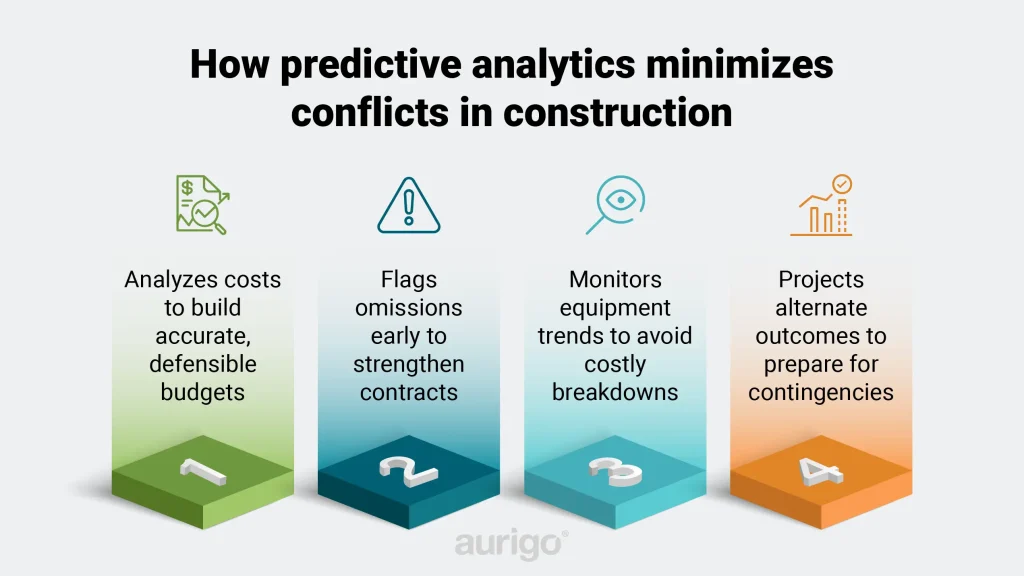
How predictive analytics builds smarter, more resilient projects
AI-driven analytics add a new layer of intelligence, drawing insights from past and ongoing projects to detect risks, predict outcomes, and enable proactive data-driven decision-making. Since this technology enhances rather than replaces the foundational construction management software, meticulous preparation and documentation remain the first line of defense. Before breaking ground, teams must be trained in schedule management, cost tracking, and contract compliance. They must also maintain accurate records, including schedules, RFIs, photos, and daily logs. This data forms the foundation for predictive models that help agencies create contingency plans and prepare for potential disruptions.
Break down costs to determine accurate budgets
Budget overruns are among the most common sources of disputes. By combining advanced analytics with real-time and historical data, agencies can move beyond rough estimates to develop highly accurate data-backed budgets.
By analyzing historical project data, the AI models in this construction management software can identify realistic material requirements, labor needs, and time allotments. Critically, these models rely on accurate input from trained teams following transparent scope change and cost tracking procedures. They can also simulate ‘what-if’ scenarios that consider factors such as policy delays, supply disruptions, weather changes, or cost inflation, helping agencies anticipate financial impacts before they occur.
This data-driven approach builds credibility with oversight committees and funding agencies by ensuring that the budgets accurately reflect the true complexity of projects rather than relying on optimistic assumptions. Projects that employ predictive cost modeling are better equipped to reduce the likelihood of cost-related disputes and overruns.
Catch omissions early to strengthen contracts
Clear, detailed contracts are the foundation of successful construction projects. AI-powered insights strengthen this process by helping teams draft contracts that accurately capture the project’s scope, materials, and timelines. It can flag likely risk areas that have historically led to claims, such as undefined scope boundaries, missing clauses, or conflicting specifications. Predictive analytics highlights these blind spots before the contracts are signed by analyzing data from past projects. Teams can then address these ambiguities before finalizing contracts, ensuring all parties work from the same, clearly defined playbook. And the results? Stronger contracts, fewer mid-project surprises, and greater trust between owners and contractors.
Track equipment performance patterns to prevent costly breakdowns
Equipment downtime remains one of the least visible yet most damaging causes of project delays. While the resulting disruptions may initially go unnoticed, their effects quickly become apparent in missed deadlines, stalled progress, and rising costs. AI can analyze service history and expected performance to identify patterns that signal when maintenance is likely to be needed, alerting the teams in advance.
By detecting subtle inconsistencies such as irregular usage or maintenance lapses, AI can prompt proactive maintenance and reduce disruptions, keeping schedules on track. For public infrastructure projects, where even small delays are highly visible to communities, this approach is not just about operational efficiency. It also ensures accountability, reliability, and public confidence in the timely delivery of large and critical projects.
Model alternate outcomes to prepare for disruptions
No project is immune to uncertainty. From extreme weather to policy shifts and supply chain bottlenecks, disruptions are inevitable. By leveraging predictive analytics in this construction management software, agencies can model ‘what-if’ scenarios, assess their cost and schedule impacts, and develop contingency plans. This enables project teams to anticipate risks early and take corrective action, helping to prevent disagreements over costs, timelines, and contract terms.
Conclusion
When human expertise meets machine intelligence, project outcomes improve exponentially. Foundational preparation—through trained teams, robust documentation, and strong contracts—remains essential. However, AI-powered capital program management strengthens these efforts, providing teams with the foresight to act early, communicate clearly, and manage risks proactively. Disputes may be an unavoidable part of construction, but how they are managed defines success. Leveraging predictive analytics in construction management software enables public owners to anticipate challenges, enhance accountability, and deliver capital programs with greater predictability and trust.
Aurigo Lumina helps government agencies do exactly that by serving as an intelligent copilot that provides actionable insights, automates risk analysis, and makes complex data easy to search and understand. It helps you make confident decisions, stay ahead of risks, and manage capital programs that stand the test of time.
You might like

Frequently asked questions
Why do construction disputes continue to be a persistent challenge?
Construction disputes often arise from misaligned expectations, incomplete data, and delayed visibility into emerging risks. When issues are identified too late—after costs escalate or schedules slip—resolution becomes reactive and costly. The challenge lies not just in managing disputes, but in recognizing early signals before they evolve into formal conflicts.
How does predictive analytics change the approach to dispute prevention?
Predictive analytics introduces a forward-looking lens to project management. By analyzing patterns across schedules, contracts, financials, and field data, AI can surface potential risks before they escalate. This allows project teams to intervene early, align stakeholders, and address issues proactively rather than resolving disputes after the fact.
What is the broader impact of preventing disputes on project outcomes?
Preventing disputes strengthens more than just schedules and budgets—it improves trust across project stakeholders. When risks are managed early, teams collaborate more effectively, decision-making becomes more transparent, and projects progress with fewer disruptions. Over time, this leads to more predictable delivery and stronger long-term program performance.