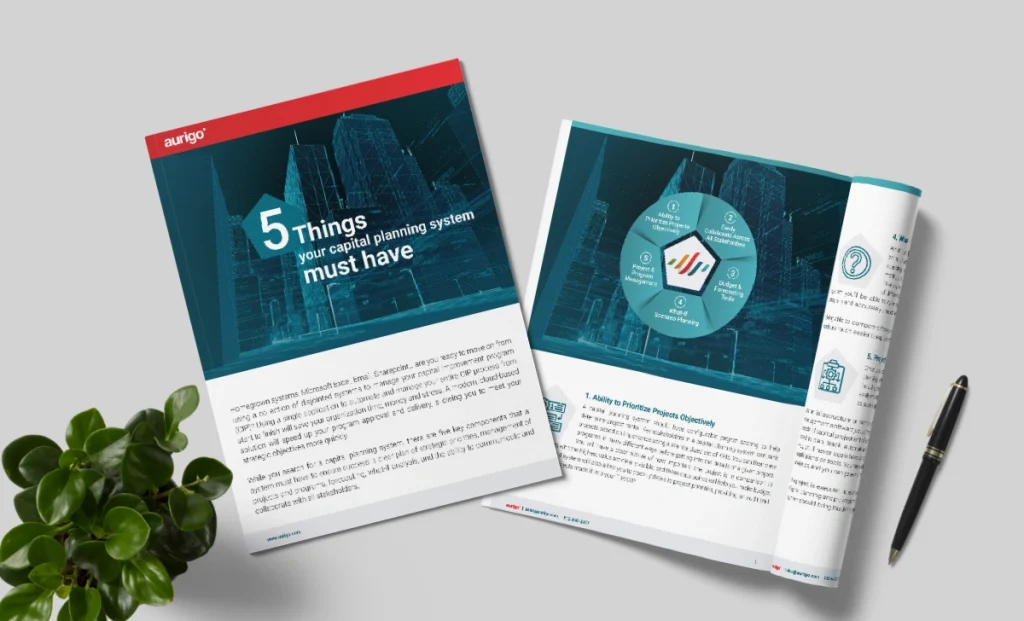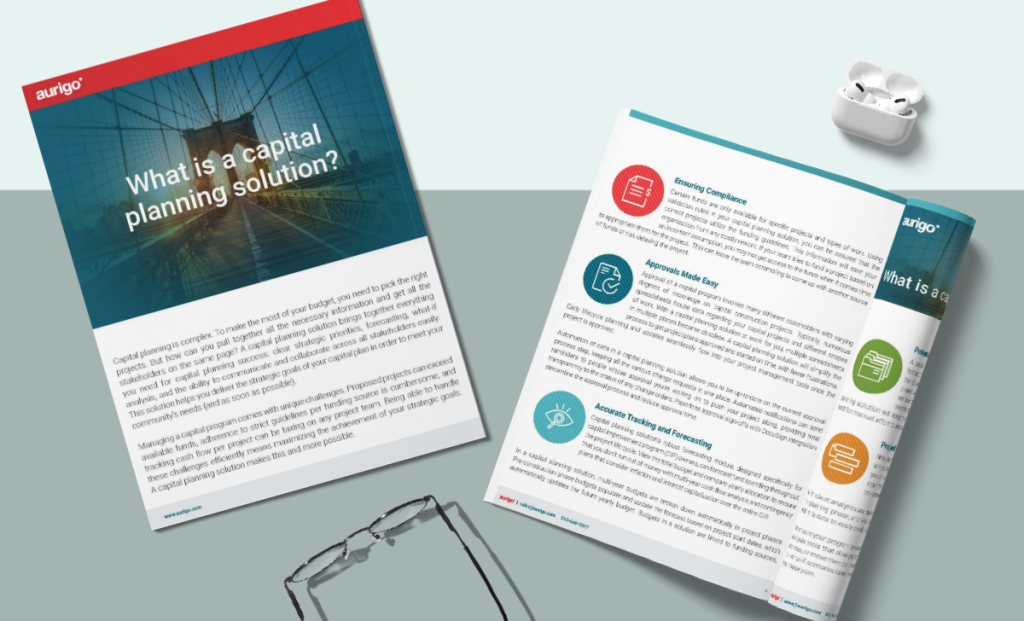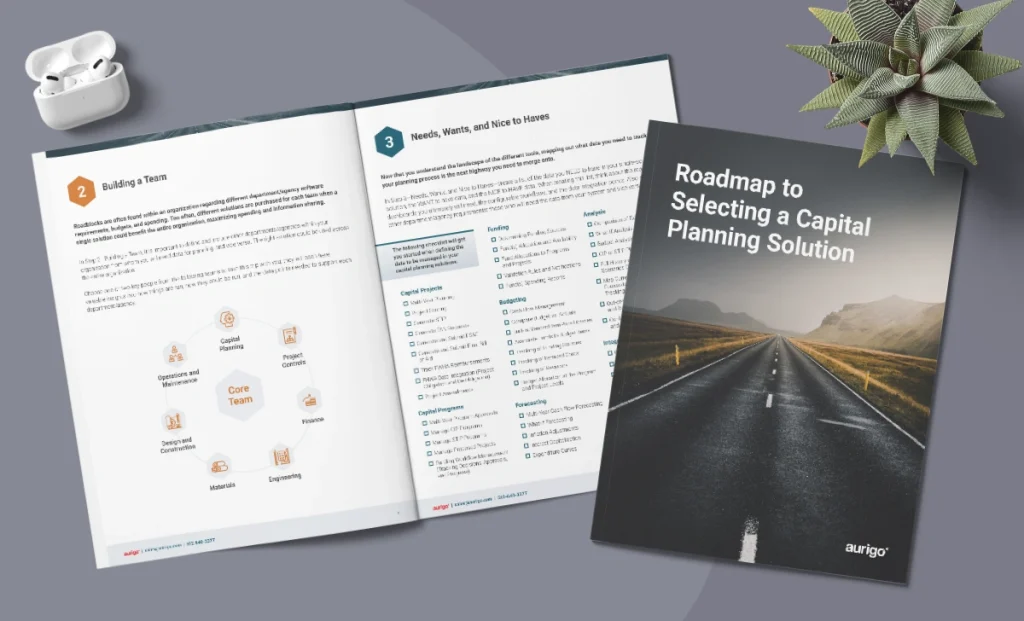



What is the difference between a thriving community and a struggling one? In the world of public projects, it is the quality of its capital plan that matters. Today, government agencies face a dual crisis: a massive infrastructure funding gap and systemic project failures. The American Society of Civil Engineers’ 2025 report card identifies a staggering $3.7 trillion funding shortfall, while a 2024 McKinsey analysis reveals that major projects suffer from 79% cost overruns and 52% schedule delays.
Compounding this crisis is a steep reliance on outdated tools, such as spreadsheets and generic ERPs, which are not designed for the complexities of capital projects and portfolio management. This reliance is a critical liability, leading to failures that waste scarce public funds and erode community trust. This blog breaks down how capital planning software helps identify and prioritize the right projects to fund.
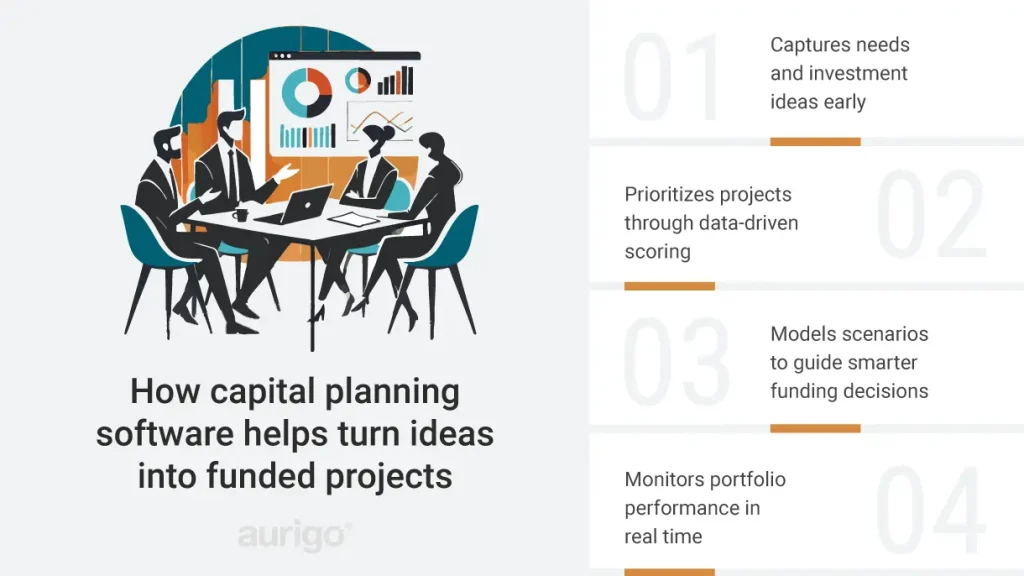
How capital planning software transforms ideas into funded projects
At the heart of effective capital portfolio management is a strategic life cycle that helps turn an initial community need into an actionable program. This upstream process, which occurs long before construction, follows a clear progression from an initial idea to a fully funded Capital Improvement Program (CIP).
We can divide this life cycle into five distinct steps.
Step 1: Gather needs and investment ideas
The foundation of your capital project is a comprehensive gathering process. This first step involves capturing all potential needs and investment ideas, whether they originate from public feedback or internal agency assessments. Instead of relying on scattered requests, a modern approach uses a standardized framework to consistently capture and evaluate every idea. This is often done through a charter, the initial document that defines an initiative’s purpose, benefits, and alignment with your strategic goals, ensuring every potential project in your portfolio has a clear and valid justification.
Step 2: Prioritize projects with data-driven scoring
Confidence in your capital project comes from a robust, data-driven selection process. This is achieved by moving beyond simple cost analysis to objectively evaluate and rank each potential project using standardized scoring tools—a core feature of capital planning software. The scoring framework, combined with an in-depth financial analysis, including cash flow forecasting, budget evaluation, and project funding, aligns project selection with your agency’s strategic goals, financial realities, and risk profile. The framework enables you to consider a comprehensive range of criteria, including safety, compliance, environmental impact, and community benefits. This ensures that you allocate public funds to initiatives that deliver the maximum value.
Step 3: Plan and compare scenarios
With a portfolio of high-value projects selected, the next step is to evaluate how they perform under different conditions. Rather than relying on a single, static plan, modern capital planning software allows you to model multiple ‘what-if’ scenarios against key factors, such as risk, project scores, and overall budgets. Advanced AI capabilities enable planners to automatically generate and compare project scenarios, testing how different combinations impact funding, timelines, and outcomes. Conversational AI further enhances this process, allowing users to explore scenarios through natural-language questions and instantly see the trade-offs between cost, schedule, and impact—without the need for manual calculations. The result is a clear, data-driven view of potential outcomes that supports smarter and faster investment decisions.
Step 4: Allocate funds intelligently
Comparing scenarios ensures your limited capital is directed to the projects with the greatest community impact. To achieve this, intelligent fund allocation combines insights from smart scoring, data-driven prioritization, and ‘what-if’ analysis. Here, AI plays a supportive role by helping optimize scenarios and resource use without replacing your judgment. This process enables a shift from making a good choice to finding the best one.
Step 5: Monitor project health in real time
Finally, a capital plan is not a static document. It must be actively monitored to stay on track and relevant. An integrated process provides a centralized, real-time dashboard to track the health of your entire capital project. Smart alerts and notifications keep all stakeholders informed about critical changes, enabling them to take timely action. This continuous monitoring allows for rigorous centralized financial control, allowing you to track commitments and actuals against your budget in real time. It also provides the agility needed for effective risk mitigation, helping you efficiently manage inevitable changes in project scope or political priorities with the most current data.
The future of capital planning
Capital planning software specifically helps you make this transition. Aurigo Essentials Plan is a purpose-built solution designed for local and regional government agencies to manage the entire planning life cycle. It provides the tools you need to move beyond spreadsheets and make swift, intelligent, and transparent decisions that best serve your community.
You might like
Frequently asked questions
What is a CIP, and why does it need modern capital planning software?
A CIP (Capital Improvement Program) is a multiyear plan that prioritizes and funds major infrastructure projects. Traditional spreadsheet-based methods can lead to scattered data, low visibility, and poor decision-making. Modern capital planning software centralizes project needs, applies data-driven scoring, and aligns funding with strategic goals, enabling agencies to build smarter, more transparent CIPs.
How does modern capital planning software improve project prioritization for CIPs?
Instead of subjective or manual ranking, modern software uses standardized scoring frameworks and financial analysis to objectively evaluate and rank projects based on criteria like risk, community benefits, compliance, and budget impacts. This ensures that limited funds are allocated to the highest-value initiatives.
What advanced capabilities does modern capital planning software offer for scenario planning?
Modern solutions enable agencies to model multiple “what-if” scenarios, test how different project combinations perform against changing budgets, risk profiles, and goals, and compare trade-offs quickly. AI-enabled scenario analysis improves confidence in decisions and helps optimize funding strategies for reliable CIP outcomes.