
Leadership insight
Charting the path forward: The role of AI/ML in planning resilient capital infrastructure
AI and ML are enabling infrastructure owners to move from reactive decision-making to predictive, data-driven planning that improves resilience, optimizes investments, and strengthens long-term outcomes.


Discussions and knowledge sessions during regional Department of Transportation (DOT) meetings have focused on essential subjects, the most significant being resilience planning in the face of climate change. The Western Association of State Highway and Transportation Officials (WASHTO) conference in Hawaii last year was a prime example. Recent events have underscored Hawaii’s unique transportation infrastructure resilience challenges, which exceed those faced by other jurisdictions. The Hawaii DOT used the conference to showcase its efforts and the techniques it has used to improve resilience in its transportation infrastructure. There is much to learn from Hawaii’s approach to building resilient transport networks.
Rising to the challenge: Addressing the urgent need for better resilience planning in an era of climate uncertainty
Resilience planning has acquired a note of urgency, with incidents of seemingly unpredictable weather taking a massive toll. Some incidents, such as the wildfire in Maui, Hawaii—the deadliest in the U.S. in over a century—and the heat wave in Texas, as well as other parts of the central U.S., have captured national headlines, placing an unprecedented strain on infrastructure, including on its transportation network. Additionally, the devastation caused by tropical storm Hilary in California—a region more accustomed to droughts than flash floods—has further underscored the need for robust resilience strategies. University researchers have warned that the cost of maintaining and replacing roads due to rising ocean levels, floods, fires, and landslides could amount to $26.3 billion annually by 2040 if issues are left unaddressed.
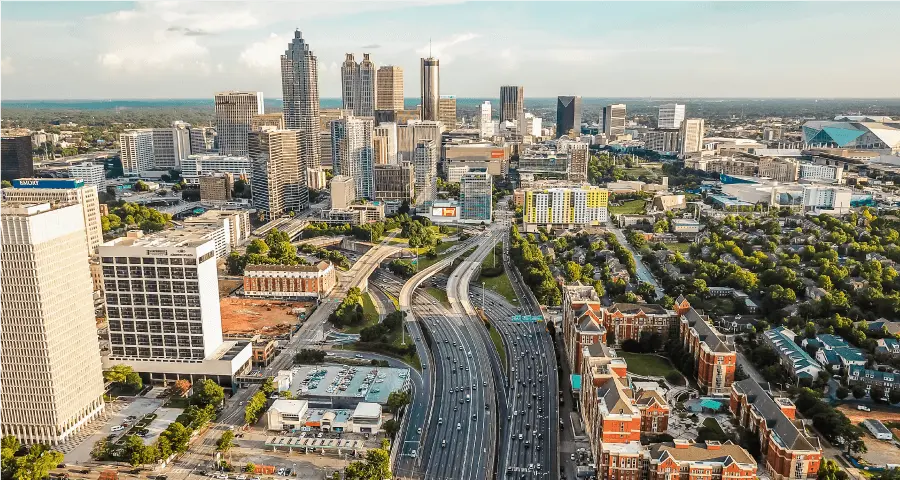
The pressing question is: How can we make infrastructure more resilient against the rising threat of climate change through cost-effective planning?
The Ohio DOT (ODOT) was among the earliest to adopt a resilience plan that identifies vulnerabilities in interstate transport facilities stemming from climate change, extreme weather, and other threats. Since 2016, ODOT has collected data on transportation stressors and has recommended strategies to mitigate these threats. Ohio is not alone in its efforts to address the challenges of nature’s unpredictability. For instance, the Colorado DOT’s I-70 Risk and Resilience Pilot has been working toward this goal. Dozens of similar projects could be underway soon.
While agencies have the data necessary to select projects in a traditional sense, the challenge lies in the lack of talent or patience required to sift through vast amounts of data from various sources and extract valuable insights. One example of how Artificial Intelligence (AI) and Machine Learning (ML) could help is in predicting potential flood events. DOTs traditionally use hydrological data supplied by external sources to determine potential flood incidents. Ideally, infrastructure should be located in areas that, statistically, only experience catastrophic flooding every 500 years. It is not normal for owners to proactively apportion resources to retrofit or replace them for resilience objectives. This is because the general perception of catastrophic events is that they are unlikely to occur. Unfortunately, climate change has shattered these views, necessitating a shift in realities.
Driving efficiency in DOTs: Harnessing AI/ML for proactive infrastructure planning
The new reality is that a bridge may need to be replaced or modified earlier than expected. It is difficult for humans to swiftly arrive at the decision to preserve their infrastructure and maintain the rest of their systems at the lowest possible cost. Public agencies would, therefore, benefit from a reliable and assistive method that allows them to focus on projects that are vulnerable to nature’s forces and that need immediate attention. An AI-based predictive model can do the job quickly and accurately, letting humans funnel their budgets to the right place at the right time.
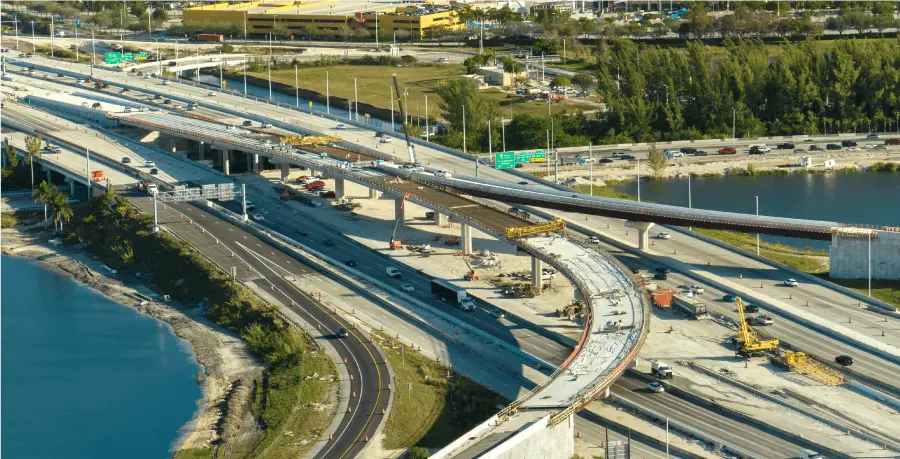
Experience has shown that a dollar put precisely where it needs to be, when it needs to be there, saves up to seven dollars compared to playing catch-up later on.
The data—massive amounts—required to forecast the infrastructure risks is available. Frustratingly, we do not have the enormous workforce required to analyze it. There are other challenges as well. The data is siloed within state DOTs, with much residing in government and university databases that are not attached to a DOT. We need technology to free the data, unify it, and make it available. This is where AI/ML could come to the rescue by making it possible to use existing data in new ways, letting DOTs look into the future and predict the actions required to enhance infrastructural safety and resiliency. Unsurprisingly, forward-looking DOTs are in the early stages of employing AI/ML to help with decision-making.
The Wisconsin DOT (WisDOT) is one of the early adopters of using AI/ML to select safety projects. The WDOT bypass program uses algorithms to aid in forward-looking project selection. This is a change that other DOTs would be wise to adopt because, under the traditional approach, practitioners often have to use data to react to incidents after they have occurred. This approach is not the most effective way to build a safety program.
A proactive and predictive, not reactive, approach saves lives.
DOTs are investing in AI, but the approach is in its infancy and has not yet been widely used in project selection. Technology is used today for tasks such as traffic demand modeling, which involves determining where people are coming from and where they are going to better predict how to build a system that will support demand.

Striking the balance: Leveraging AI/ML for equitable transportation planning with human oversight
AI/ML can be invaluable in selecting projects and providing predictive recommendations to address concerns. For instance, a state may have areas with a growing aging population that eventually will not want to drive long distances but would prefer to continue to live where they do today. AI/ML can be used to assess the transportation options that are most suitable for this demographic. Using data, DOTs can also determine if factors such as age, disabilities, economic disadvantages, or challenges in securing a license contribute to the inability to drive and then propose equitable solutions for investment.
WisDOT is taking the use of AI to a new level by incorporating third-party historical data to help train AI models. DOTs would do well to understand that it is essential to first view the available legacy data through the lens of current experiences before fully embracing AI/ML.
This cautious approach is necessary due to potential biases in the existing data that could hinder equitable project selection. If a library of historical decisions is used to train an AI model, human judgment should be applied to evaluate possible outcomes. This is crucial because many past transportation infrastructure project selections may not have been in the best interests of the broader community. Relying solely on previous decisions could compromise the reliability and value of a model.
Not all decisions made in the past were necessarily ‘poor’ or ‘erroneous.’ They were often made in good faith to move people and goods efficiently without causing harm. However, the undesirable impact of those decisions on society has become apparent only decades later. The aim now should be to develop models that use unbiased data. If such databases do not exist, humans should review outcomes before decisions are taken and should not relinquish their ability to apply experience appropriately to avoid inadvertent errors in project selection. Doing this ensures we harness the true power of technology to lead us to a more equitable and resilient future.
Final thoughts: Embracing change for a better tomorrow
The adoption of AI/ML in transportation planning is being met with a mixed response. So far, some DOTs seem more accepting of new technologies than others. The key to easing fears about it is understanding that, while it is valuable, technology should be seen as complementing human intelligence and experience rather than replacing them.
Truth be told, the more significant barrier to change is the deep-rooted love for tradition that state DOTs hold on to, along with their reluctance to embrace technological advancements. However, the steady winds of change are blowing. When it becomes clear that AI/ML can present options that DOTs did not even know they had, public infrastructure owners will embrace the technology and use it to make more informed and equitable decisions both quickly and effectively.
It is an accepted fact that there will never be enough money to fix every problem, and there will not be enough employees to analyze every possible solution. But now, technology helps infrastructure owners select the right projects at the right time and build a better tomorrow with greater confidence.
About the author
Michael Tooley brings over 35 years of public service and leadership experience to Aurigo. He previously served as Director of the Montana Department of Transportation and chaired the AASHTO Committee on Safety. Prior to leading Montana DOT, he was the Chief of the Montana Highway Patrol and earlier served as a corpsman in the U.S. Naval Reserve. As Vice President, Industry Group at Aurigo, Michael drives the expansion of industry partnerships across public and private markets and deepens engagement with sectors aligned to Aurigo’s mission. He is a graduate of Grand Canyon University and the FBI National Academy in Quantico, Virginia.