
Blog
How construction bidding software optimizes bid efficiency
Construction bid management is evolving from a transactional process to a strategic function driven by transparency, data, and speed. Digital bid management platforms enable organizations to standardize procurement, improve competition, and make more informed contractor selection decisions.


Accurate cost estimation is just the beginning of a successful capital program. To ensure efficiency, working with the right vendors is essential. However, traditional manual bidding often introduces administrative challenges such as disjointed communication and inconsistent bid evaluation.
This is where purpose-built construction bidding software comes in. These solutions centralize information and simplify workflows by streamlining tasks like vendor pre-qualification, bid submittal logging, customizable bid scoring, and e-bidding. For capital owners, this means a more efficient, transparent, and precise process for selecting the best vendors and managing the entire bidding process.
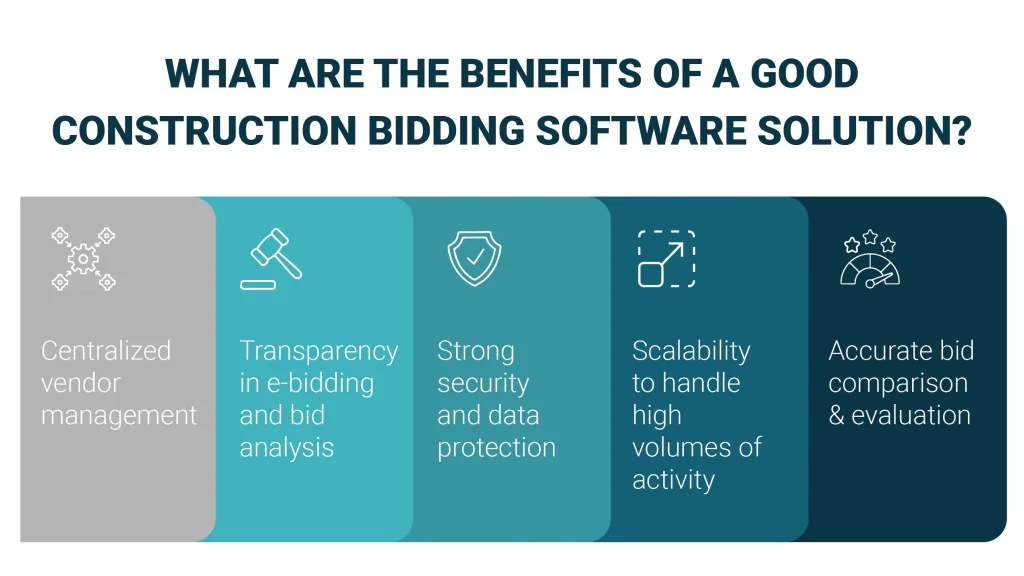
Top 5 benefits of construction bidding software
1. Centralized vendor management
Not all projects are equal – some require specific skills and expertise, while others are more open-ended. With so many variables, how do you select the right vendors? A good construction bidding software solution allows you to proactively manage your list of vendors in a centralized and reliable way. You can then shortlist vendors for specific projects or allow everyone to bid. Construction bid management software notifies vendors about the bid requirements and requests for which they submit quotations. You can also add the terms and conditions, milestone dates, and other rules and details for vendors. As a result, the bids received are not just responses but comprehensive proposals from vendors who understand the unique requirements of the project at hand.
2. Transparency in e-bidding and bid analysis
Construction bidding software streamlines the bidding process, allowing organizations to manage everything online, from inviting vendors to finalizing contracts. Vendors receive a bid sheet outlining the items they need to provide unit price quotes. By excluding internal estimations, the software ensures a competitive and unbiased process. Vendors can log in as bidders and complete the electronic bid sheet, speeding up the process and eliminating paperwork while promoting a more environmentally friendly approach.

3. Strong security and data protection
Construction bidding software is designed with robust security protocols to ensure the integrity of the bidding process. One key feature is the confidentiality of bids. Each bidder can only see their own bid, preventing undue influence or unfair advantage. This ensures a level playing field, where each vendor competes solely on the merit of their proposal.
The software leverages advanced encryption and secure access controls to protect sensitive data, ensuring the confidentiality of project details and vendor information while fostering trust in the e-bidding process. It also maintains a comprehensive audit trail of all activities, promoting transparency and accountability. Regular updates address emerging security threats and vulnerabilities, ensuring the software remains a dependable and secure platform for managing bids.
4. Scalability to handle high volumes of activity
Most vendors tend to submit their quotations at the last moment, leading to a surge in system usage. A well-designed construction bidding software solution is agile and resilient, capable of handling high volumes of activity without interruptions. Scalability is a key feature, especially when multiple bids are active simultaneously, maintaining consistent and dependable performance under any demand. This ensures the integrity of the e-bidding process and provides all vendors with a fair and equal opportunity to participate.
5. Accurate bid comparison and evaluation
Construction bidding software brings precision and clarity to the bidding process. It allows instant benchmarking by comparing vendors’ prices with your engineers’ estimates. Interactive tables compile hundreds of materials and labor line-item costs from the engineers’ estimates alongside each bid proposal. The software also enables a side-by-side comparison of vendor quotations against the engineers’ estimates. This capability helps stakeholders identify the most competitive and least favorable bids, facilitating informed decision-making.
Conclusion
The bidding process is crucial in construction, and having the right construction bid management software makes all the difference. Bidding software allows you to choose the vendors you want to work with, enables e-bidding, and streamlines bid leveling. This is essential for efficient, accurate, and cost-effective capital program management.
With integrated bid-letting and tabulation capabilities, Aurigo Masterworks enables capital program owners to compare bids against each other and the engineers’ estimates. By evaluating bids based on various criteria, you can make data-driven decisions to ensure the project remains on schedule and within budget.
You might like
Frequently asked questions
Why is bid management becoming a strategic function in construction?
Procurement decisions directly influence project outcomes, yet traditional bid processes often lack transparency and consistency. As projects grow in complexity, organizations are recognizing that structured, data-driven bid management is essential to ensure fair evaluation, reduce risk, and align contractor selection with long-term project objectives.
What challenges do traditional bid management processes create?
Manual and fragmented processes can lead to inconsistent evaluations, limited visibility into contractor performance, and delays in decision-making. Without standardized workflows, organizations may struggle to compare bids objectively, increasing the risk of selecting vendors based on incomplete or misaligned information.
How do digital bid management solutions improve project outcomes?
Digital platforms bring structure and transparency to the bidding process by centralizing documentation, standardizing evaluation criteria, and enabling real-time collaboration. This allows organizations to make more informed decisions, improve accountability, and streamline procurement timelines while maintaining compliance and fairness.