
Blog
Is outdated digital infrastructure leaving government agencies vulnerable?
Outdated digital infrastructure is no longer just inefficient—it is a growing risk. Legacy systems limit visibility, slow decision-making, and expose agencies to operational and compliance challenges in an increasingly complex environment.


Legacy systems can impede operations, reduce efficiency, increase cyber risks, and drain budgets. This situation demands change. Incidents such as ransomware attacks on the City of Oakland and Dallas that disrupted emergency and non-emergency services, court operations, and other city functions highlight the critical challenges capital program owners face in managing outdated systems.
However, evolving technologies can be leveraged to improve efficiency and meet rising public demands. Each year, the U.S. government invests over $100 billion in IT, with nearly 80% of that going toward maintaining older systems. By embracing newer solutions, agencies can streamline coordination, optimize resources, and enhance capital program management, ensuring they remain agile and effective in serving their communities.
Why do agencies hesitate to upgrade?
Agencies often hesitate to upgrade their existing systems for one or more of the following reasons:
1. Budget constraints and funding issues
This is perhaps the most critical factor. The high upfront costs of migrating to new systems require substantial investment. With limited budgets often directed toward immediate needs or urgent issues, digitization is frequently deprioritized.
2. Legacy system complexity
Upgrading is challenging due to integration, dependency, and data migration issues. Legacy systems are critical to daily operations, making it difficult to introduce new technologies without causing disruptions. Additionally, data stored in outdated systems may be hard to migrate, raising concerns about losing critical information or facing extended downtime.
3. Regulatory and compliance barriers
Government agencies must adhere to various regulations, including data privacy laws and cybersecurity policies. These strict requirements can complicate and slow down the adoption of new technologies.
4. Cultural resistance and change management
Typically, agencies are cautious and risk-averse, prioritizing stability and reliability over innovation. A workforce resistant to change or lacking the skills to adapt to new technologies can hinder modernization efforts and slow overall progress.
What are the benefits of an advanced capital program management software solution?
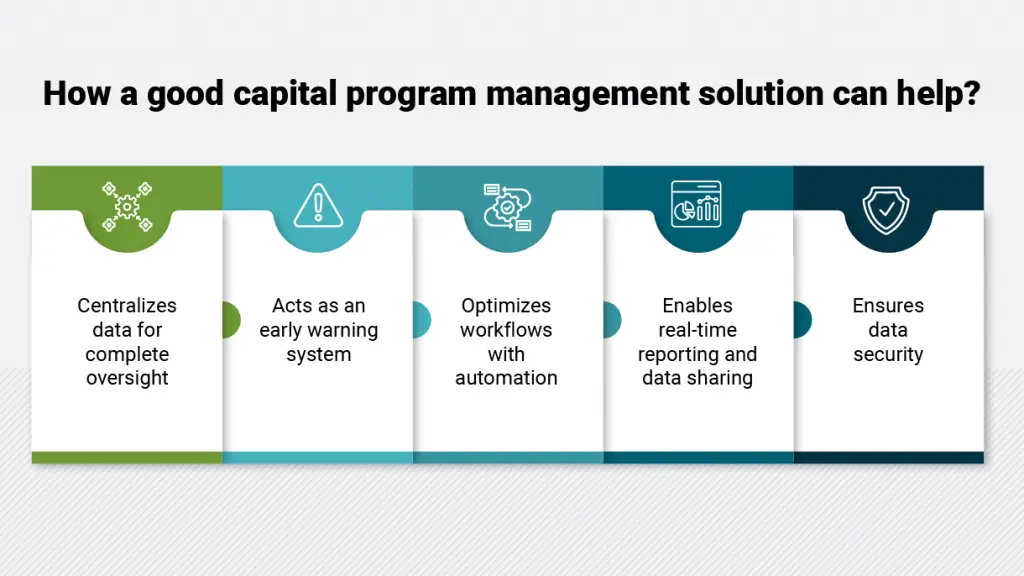
Beyond addressing challenges such as integration and data migration, modern systems offer tangible improvements in efficiency, collaboration, and project outcomes. A well-designed capital program management software solution can benefit agencies by:
1. Providing complete oversight and coordination
A unified platform centralizes every aspect of your capital program, allowing you to manage the entire lifecycle, from CIP/TIP planning to operations and maintenance, all in one place. This comprehensive visibility improves the tracking of your project progress, milestones, and budgets. It allows for efficient resource allocation and ensures no detail is missed at any stage.
2. Acting as an early warning system
The system enables you to track project activities, analyze trends, and assess the performance metrics of public agencies to identify potential risks before they escalate. Automated alerts ensure the right team members are notified about delays, budget overruns, or compliance issues, giving managers time to implement corrective actions proactively. This reduces the likelihood of costly errors or project failures.
3. Optimizing and automating workflows
A construction management software solution ensures seamless project execution by automating key processes such as approval workflows, resource scheduling, and document management. Bottlenecks are eliminated as tasks are automatically routed to the appropriate stakeholders, and resources are allocated based on real-time availability. This consistency will help you experience fewer delays, improved productivity, and greater operational efficiency. Additionally, these modern solutions help you scale and configure systems to meet your specific requirements.
4. Enabling real-time access to reports and dashboards
With instant access to reports and project dashboards, decision-makers can monitor project health, costs, timelines, and KPIs in real time. This empowers you to make fast, data-driven decisions, avoid delays, and keep projects on track. Interactive dashboards allow users to drill down into specific details, providing actionable insights at every stage of the capital program.
5. Facilitating seamless information sharing
The system breaks down silos by allowing you to connect with your extended teams, including consultants, contractors, and agency staff. Whether in the office, at home, or on the jobsite, your teams can access the same up-to-date data, which enhances collaboration and minimizes miscommunication.
6. Centralizing data
A unified repository enhances visibility, reduces manual work, and ensures compliance with open-record requirements, eliminating the need for paper storage. By creating an organized audit trail, the system provides accurate revision control and a single point of reference for stakeholders, including internal teams and external partners such as contractors, consultants, and inspectors. Integrated systems give role-based access to the latest plans, documents, and changes while reducing duplication and incomplete data entries.
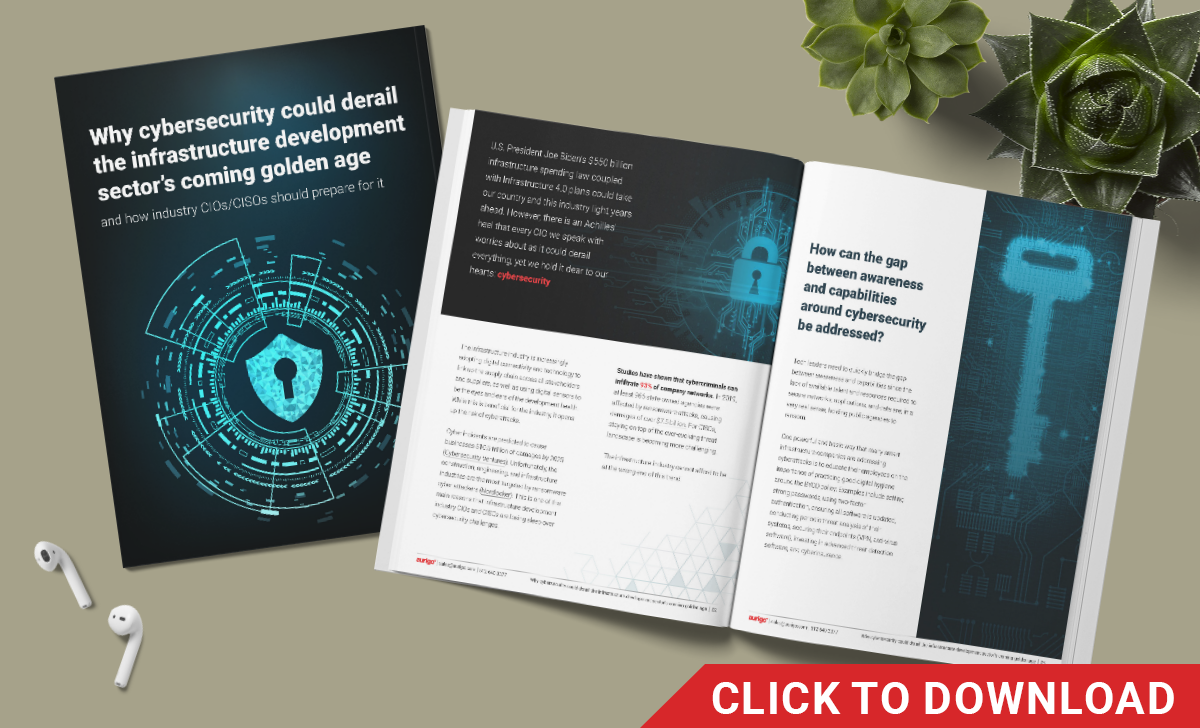
7. Security
The infrastructure industry is one of the most challenging sectors for maintaining a cyber-secure environment. The huge array of interconnected devices, machines, sensors, cameras, databases, and software provides many entry points for cybercriminals. A solution built 100% in the cloud offers you the highest levels of security and reliability. By utilizing a software solution that meets FedRAMP and StateRAMP standards, you can be confident that your data is secure.
It’s time to upgrade
Outdated systems can drain resources and slow down projects. Therefore, you should seek the latest solutions to further modernize capital program management to unlock efficiency, streamline operations, and improve IT infrastructure. The path to adopting technology is more affordable than you think, with grants such as Advanced Digital Construction Management Systems and IIJA available to support this transition. The U.S. Department of Transportation and the Federal Highway Administration have allocated up to $17 million annually for the financial years 2024, 2025, and 2026. This will help you to switch to modern solutions that can improve project management, automation, and data integration.
When evaluating software solutions, it is essential to consider how each feature aligns with your agency’s specific requirements and operational goals to enhance program success and productivity. Aurigo Masterworks provides you with a comprehensive suite to support your capital program needs. It simplifies complex processes, ensuring consistency and predictability while meeting FedRAMP and StateRAMP standards for top-tier security and reliability.
You might like
Frequently asked questions
Why is outdated digital infrastructure a growing concern for government agencies?
Legacy systems were not designed for today’s scale and complexity. As infrastructure programs expand, these systems limit visibility, slow decision-making, and increase the risk of inefficiencies and compliance issues.
What risks do agencies face when relying on legacy systems?
Agencies may encounter fragmented data, delayed reporting, limited integration, and higher vulnerability to errors. These risks can lead to cost overruns, project delays, and reduced accountability.
How can agencies modernize their digital infrastructure effectively?
By adopting integrated, cloud-based platforms that provide real-time visibility, improved coordination, and scalable workflows, agencies can reduce risk and improve overall program performance.