
Blog
What are the five benefits of digitizing federal aid reimbursement?
Digitizing federal aid reimbursement transforms funding management from manual reconciliation to structured, real-time oversight. By improving compliance, visibility, and integration with financial systems, agencies can reduce risk, accelerate cash flow, and make more confident capital decisions.


The U.S. federal government allocated an estimated $62 billion for infrastructure projects in FY 2025. Managing this influx has become a high-stakes challenge for government agencies, as these funds come with heightened expectations for accountability and performance. Agencies that want to maintain funding and sustain projects must ensure seamless project delivery, stable cash flow, and strict compliance with federal requirements. To do that, they first need to assess whether the construction management software currently in use is sufficient to meet today’s funding demands.
Why is federal aid management under strain?
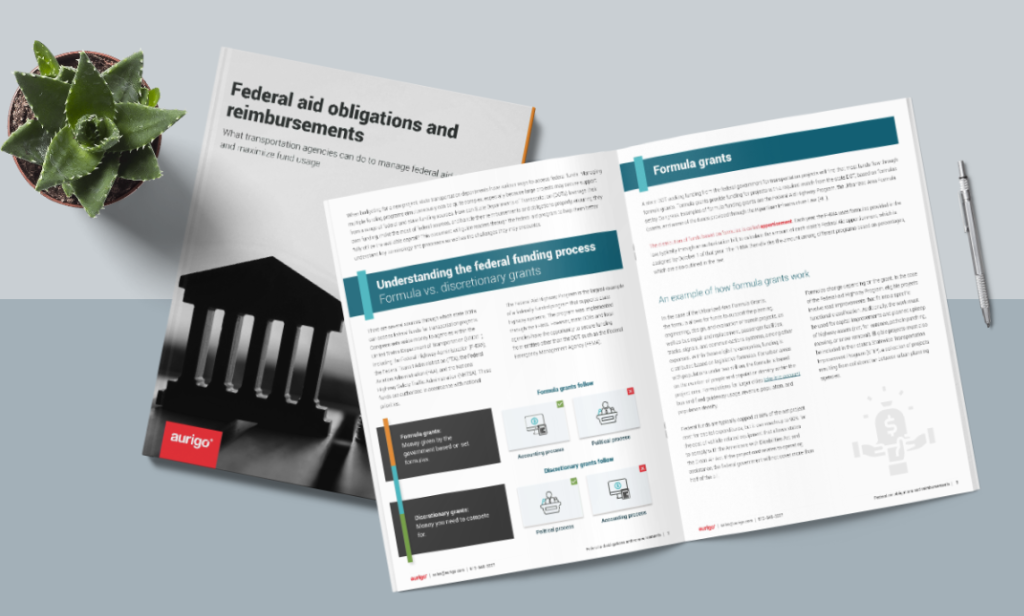
Managing federal aid is an administratively intensive and structurally complex task, with numerous dependencies and checkpoints. Many agencies still handle the reimbursement process manually and reactively, putting themselves at financial and compliance risk. Let’s look at some of the most common pressure points.
1. Challenge: Aligning funds with the right project
What this means: Agencies must secure funding authorization before work begins and ensure each project component is linked to the correct funding source.
2. Challenge: Strict eligibility requirements
What this means: Only authorized expenses within the approved scope, timelines, and cost-share limits qualify for federal reimbursement.
3. Challenge: Time-bound obligations
What this means: Federal funds must be used within defined timelines; missed deadlines can result in de-obligation or reallocation.
4. Challenge: Managing multiple funding sources
What this means: Projects often combine federal, state, and local funds, each with distinct rules and reporting requirements.
5. Challenge: Manual processes and limited automation
What this means: Reliance on spreadsheets and disconnected systems, with limited integration with the Financial Management Information System (FMIS), adds an administrative burden and increases the risk of errors.
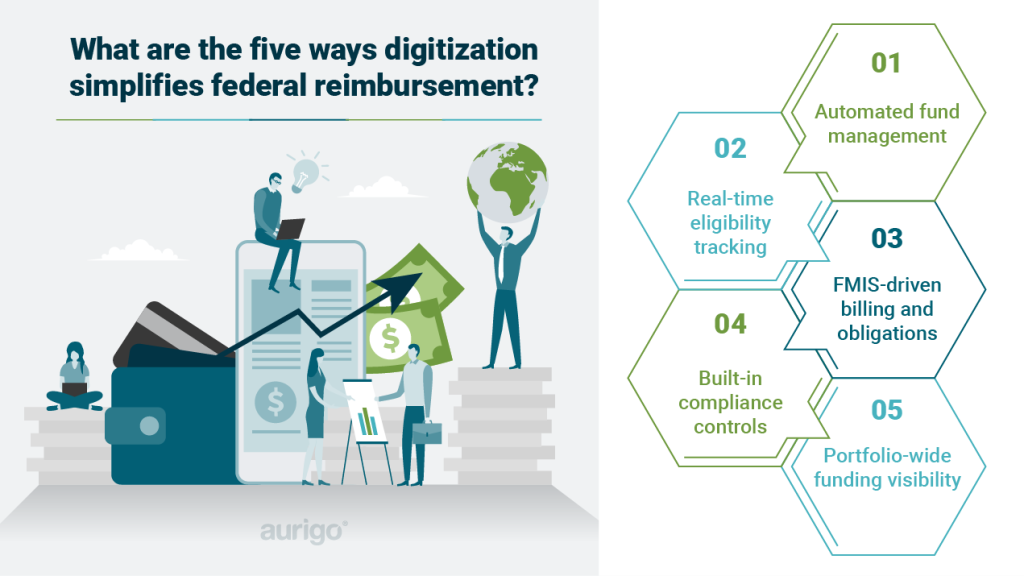
How can digitization simplify federal reimbursement and obligation?
Digitizing the federal aid process transforms how government agencies manage funding, lowers risk, and safeguards their financial stability.
1. Automated processes for efficient fund management
Digitization replaces spreadsheets with automated, structured workflows. Stakeholders can monitor project components funded by federal, state, or local sources in a centralized setting, while invoices and documentation are easily verified before submission.
- Operational advantage: Automated workflows reduce administrative burden, shorten billing cycles, and minimize human error.
- Strategic impact: Finance teams spend less time reconciling transactions and more time overseeing portfolio performance, improving efficiency and accountability across programs.
2. Optimal funding alignment and eligibility protection
Digital systems provide real-time visibility into federal share limits, funding authorization, and milestone compliance. Expenses can be validated before being incurred, preventing ineligible costs from entering the reimbursement cycle. Automated deadline monitoring also reduces the risk of authorizations expiring, obligation windows being missed, or funds being de-obligated and reallocated.
- Operational advantage: Improved tracking protects federal aid reimbursement eligibility and reduces rejected claims.
- Strategic impact: CFOs gain confidence that funding allocations remain aligned with program requirements, preserving reimbursement flow and institutional credibility.
3. Unlocking full funding potential with FMIS integration
Direct integration with an FMIS improves obligation and reimbursement management. Obligation requests, billing submissions, and funding updates flow seamlessly between systems, accelerating approvals.
- Operational advantage: Faster billing and reduced manual intervention improve cash flow predictability.
- Strategic impact: By reducing administrative friction, agencies can maximize available funding and ensure that every dollar moves efficiently from authorization to reimbursement.
4. Enhanced compliance controls with minimal risk
Modern federal aid reimbursement software includes built-in controls that automatically verify eligibility requirements, track federal participation limits, and maintain audit-ready documentation. These real-time dashboards provide complete integrated visibility, helping agencies identify possible compliance risks before they escalate.
- Operational advantage: Reduced risk of audit findings, reimbursement denials, or rescinded funds.
- Strategic impact: Stronger internal controls protect funding integrity and reinforce public trust in an era of expanded federal investment.
5. Improved visibility for informed decision-making
Digitization provides a consolidated view of project status, funding distributions, obligation balances, and reporting timelines. This enables stakeholders to monitor reimbursement progress across the entire capital portfolio rather than relying solely on static reports or delayed reconciliations.
- Operational advantage: Early identification of funding gaps, deadline risks, and cash flow constraints.
- Strategic impact: Finance teams gain the clarity needed to make defensible, forward-looking financial decisions.
From manual reconciliation to strategic funding stewardship
By digitizing federal aid reimbursement, agencies can shorten their billing cycles, reduce documentation errors, and improve audit readiness, ensuring more stable cash flow and better alignment with funding requirements.
Masterworks Federal Aid Reimbursement is a purpose-built software solution that is integrated with FMIS, automating tasks while maintaining continuous compliance oversight. It embeds funding controls directly into agency workflows, rather than functioning solely as a back-office tool, ensuring efficiency.
This structured visibility and integrated control strengthen government agencies’ ability to manage risk on two control fronts:
- Protect funding before compliance gaps escalate
Validating eligibility, funding alignment, and share limits becomes easier, reducing the risk of claims being rejected or funds being rescinded. - Transform administrative complexity into financial confidence
Agencies can be proactive and make informed decisions because all the operational, process, and compliance data are in one place.
Public infrastructure is the invisible backbone of a country, not just shaping communities but also laying the foundation for economic development. Therefore, the decisions guiding it must stand the test of time. The scale of funds going into these projects is considerable, and agencies must ensure they are used efficiently and transparently. The right software will help agencies reduce risk, improve accountability, and maximize the full value of federal aid.
You might like

Frequently asked questions
Why is digitizing the federal aid reimbursement process important for Departments of Transportation?
Digitization reduces manual reconciliation, accelerates billing cycles, and improves compliance tracking. As funding volumes increase under the Bipartisan Infrastructure Law, manual processes introduce avoidable risk and administrative strain.
How does FMIS integration improve obligation and billing accuracy?
Direct integration with an FMIS eliminates duplicate data entry, reduces errors in obligation requests, and streamlines reimbursement submissions, improving both speed and accuracy.
Can federal aid reimbursement software improve audit readiness?
Yes. Modern federal aid reimbursement software centralizes documentation, automates eligibility validation, and provides real-time visibility into funding allocations, thereby reducing compliance exposure.