

Leadership insight
Digitization: Laying the foundation for exponential change
Digitization lays the foundation for exponential change by transforming fragmented processes into connected, data-driven systems that enable faster decisions and scalable growth.


The hand-wringing over technology adoption in the construction industry is poised to end. The COVID-19 pandemic has, says JLL in its report The State of Construction Tech: 2020, “condensed technology adoption that likely would have taken three years at a normal pace into a single year.” Digitization is set to become an everyday reality. Yet construction leaders and executives, who are certain that digitization will play a transformational role, are unsure which areas of their business are most likely to deliver the highest ROI. This makes it tricky to prioritize investments in digital, delaying the digitization journey.

Digitization is being accelerated by several factors, ranging from the availability of affordable and mature technology, an emerging generation of tech-savvy professionals entering the construction industry, to the ability of digital technologies to reduce the impact of construction activity on the environment.
Perhaps the most compelling reason to go digital is the upcoming construction boom. The US government has committed $2 trillion to overhaul the nation’s infrastructure. The US president has called it a “once-in-a-generation” investment in America. The opportunity this is about to create is unprecedented. And the construction industry is already in the crosshairs of technological innovators: at last count, of the estimated 3,800 construction tech startups, more than a thousand had received $11.8 billion in funding—the road to digital looks both profitable and possible.
One of the most practical reasons to go digital is that public sector projects are becoming inordinately complex. Your organization is losing valuable time to delays as it seeks concurrence from an ever-growing number of federal stakeholders on project scope, resourcing, and budgets.
The slow process of putting together resources and materials for projects compounds the problem. Millions of dollars are added to your costs due to poor project monitoring and control , which leads to issues in the field. This has a snowballing effect on the project schedule. Besides, as a seasoned professional, you already know poor communication and collaboration have become frustratingly intractable problems in the industry, adding to errors, delays, and blame games. All these have a single solution: Digitization.
The rewards of early digitization are significant. It has the power to unlock an estimated $265 billion in new annual profits across the industry. What this means is simple: The time to go digital has never been better; the compulsion to understand the impact of digital has never been more immediate.
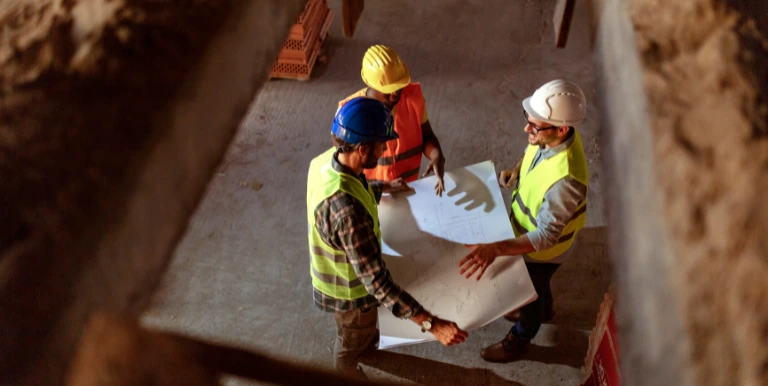
Where and how is digital going to turn the wheels of revolution in the industry? The answers are varied, but here is a look at the key areas that will benefit from digitization:
Cut through the clutter, drive accurate collaboration: By digitizing records and processes, it becomes possible to create a single source of truth for all roles, from structural design to commercial management and from project monitoring to meeting health and safety regulations. Today, projects are run by financial planning in one system, resourcing in another, legal in a third, and so on. Bringing all these into a single database eliminates the headache of coordinating scores of spreadsheets and keeping them updated. It becomes simpler to outsource functions like design and construction oversight, allowing access to high-quality services without the pain of staying on a recruitment treadmill. And it simplifies collaboration with stakeholders such as contractors, suppliers, federal agencies, and citizens.
Visibility into projects, run the real-time enterprise: Traditionally, even seasoned industry professionals take weeks to gather data. By the time the data is analyzed and the insights actioned, it is outdated. Digitization can provide you with real-time visibility into critical functions: Is there a hint of overspending somewhere? Where are we in the workflow? Are delays in the supply chain affecting progress? Are approvals or legal paperwork delaying progress? Is citizen feedback showing the need for change in project plans? Timelines on complex processes can be scrunched, leading to better on-budget and on-schedule execution.
Better planning, improved predictability: Digital systems provide the opportunity to not only bring everyone up to speed on scheduling, operations, federal approvals, and numerous such functions but also examine “what-if?” scenarios. In the past, this has not been difficult because data for many of these functions were in siloes. Digital technology integrates the data to deliver several levels of improvement in planning and forecasting.
The construction industry is rich in home-grown systems that do slices of these tasks and solve niche problems. Bringing them in sync to improve collaboration and efficiencies across the plan-design-bid-build-operate cycle should be the most immediate goal of any digitization strategy. It should also aim to create more versatile systems, allowing employees and partners to work from a variety of environments (office, home, field, car using a desktop, laptop, mobile, or tablet across a variety of networks) and share data easily in every format (there are over 300 file types used in the industry). You would need to engage with technology providers who have domain expertise and can foresee the impact of emerging new technologies.
Can the construction industry rise to the challenge of embracing digital? It can. It has proven itself in the past by making outstanding progress in mechanized automation. It can make the same progress with digital technologies and create innovative solutions around its complex processes, fragmented supply chains, constrained resources, and growing inefficiencies. As one of the least digitized industries, the change will spell exponential gains.
About the author
Sharon Bremser previously served as Director of Operations and Industry Liaison at Aurigo Software, where she led operational initiatives and strengthened industry partnerships to support effective delivery of infrastructure programs.