
Blog
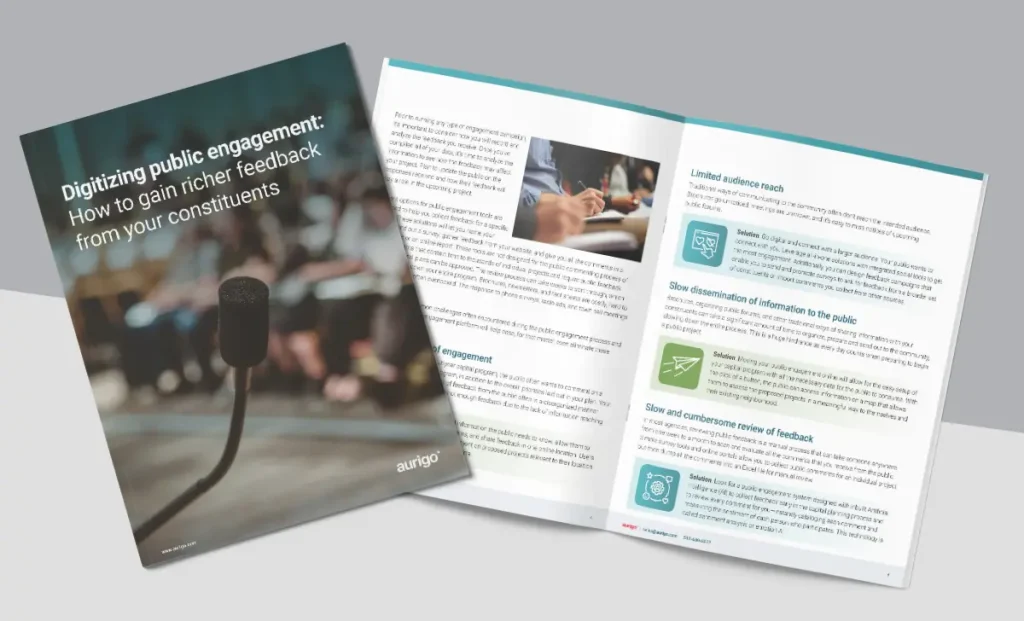
Digitizing public engagement: How to gain richer feedback from your constituents
Government agencies must adopt AI-enabled digital engagement tools to capture richer community feedback, improve transparency, and align capital planning decisions with constituent priorities.


Community engagement is pivotal in shaping infrastructure, community projects, and initiatives directly impacting constituents. Unfortunately, a significant gap exists in understanding public needs due to the lack of an efficient system that collects public input. This leads to poor participation, and the information gathered does not accurately reflect their needs. These challenges, in turn, give rise to uninformed decision-making, project delays, and increased inefficiencies in the public engagement process. Leaders must unite their community and achieve equitable participation by fostering transparent engagement and inclusive decision-making.
How does public engagement impact planning and decision-making?
Inclusivity: Engaging the public helps gather various perspectives, listen to multiple voices, and learn about their concerns. These inputs help you avoid biases in your capital program planning for the upcoming years. In a nutshell, inclusivity drives growth.
Trust: When you involve the community in your projects, you automatically garner a strong sense of accountability toward those directly impacted by your decisions. It fosters transparency and builds trust, cementing your credibility and ensuring the success of your long-term projects.
Seamless communication: Over time, the relationships you build with your community encourage them to collaborate better. This is why two-way communication with those neighborhoods, citizens, and socio-economic groups affected by your undertaking is crucial. You can achieve better results by clearly explaining to the constituents what they can expect upon completing the project.
Before you reap these benefits, you must have a well-designed community engagement strategy.
Why do traditional methods fail to promote inclusive decision-making?
Surveys, mailers, and other public involvement events, such as town halls, often rely on lengthy manual processes to create awareness, reach out to participants, and collect responses. These traditional methods may perform poorly and hinder equitable participation. For example, some participants might find town hall locations inconvenient. Likewise, flyers and emails may go unnoticed in certain communities. Using such methods also increases the chances of human error. If your data is full of inaccuracies, it will have a domino effect on your analytics, insights, and decision-making.
The solution? Digitizing public engagement.
Digitization: The simplest solution for successful community engagement
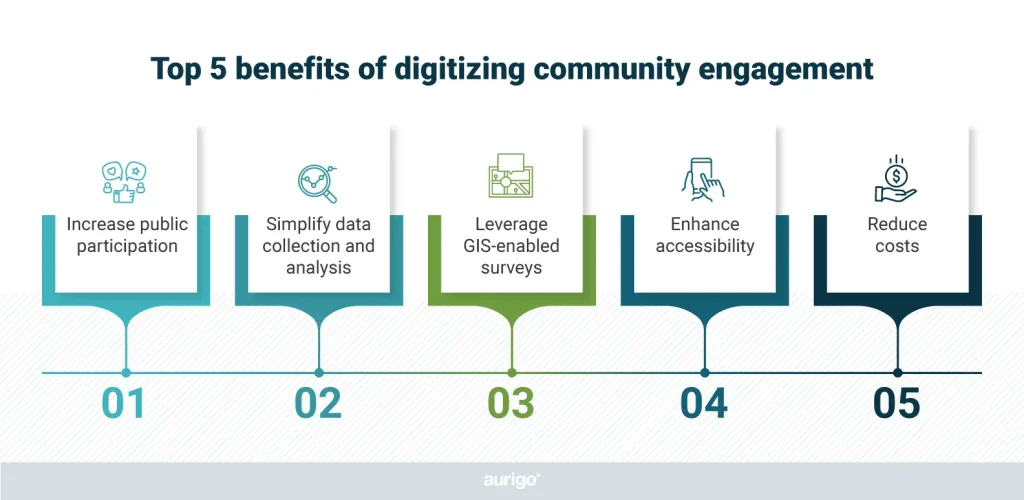
Online public engagement tools offer a host of benefits over traditional methods, such as the following:
- Increased public participation: Digital tools, as opposed to traditional methods, enable broader involvement and help you get feedback from diverse groups. You can effectively engage with various individuals through social media channels to communicate and promote your campaigns. Since your projects are long-term and may require multiple interactions with the community, you can also use the derived insights to customize your future campaigns.
- Simplified data collection and analysis: Digital survey methods greatly simplify the data gathering and storage process and prepare it for assessment. It is easier to gain insights from this information and understand the intent behind the feedback given using AI-driven sentiment analysis. Real-time reports and dashboards accelerate decision-making, improve efficiency, and maintain your campaign’s momentum.
- GIS-enabled survey: By recognizing the importance of geographical location, you can gain a deeper understanding of the challenges encountered by your community, as most public projects and initiatives are intricately linked to specific geographic areas. Having a GIS-enabled platform allows you to access information from any location. It also lets the constituents in the proposed region meaningfully assess the impact of upcoming projects on themselves and their neighborhood.
- Accessibility: Your diverse community includes individuals who face geographical, health-related, financial, and time-related barriers. They are more likely to participate digitally than show up at a specific location. Online community engagement platforms help you roll out surveys and keep your people engaged, no matter where they are located.
- Cost-effectiveness: Traditional methods require considerable investment. Using digital feedback management solutions, you can significantly reduce your public engagement spending and thus save costs on affected projects. Investing in an online community engagement platform reduces your reliance on printing materials, organizing in-person meetings (such as town halls), and processing paper-based survey responses.
Get started today with Masterworks Community Engagement
Maximize project success with Masterworks Community Engagement: a secure online solution for public outreach and feedback collection across construction, environmental, and societal impact projects. Reach more constituents using social media and AI-based sentiment analysis to spot trends early and cut processing time.
You might like
Frequently asked questions
What is digital public engagement in capital planning?
Digital public engagement uses online platforms, surveys, interactive maps, and data-driven tools to gather community input on infrastructure projects and capital improvement programs. It enables agencies to reach broader audiences, collect structured feedback, and make more transparent, informed decisions.
Why is digitizing public engagement important for government agencies?
Digitizing public engagement improves accessibility, increases participation, and captures richer, more actionable feedback compared to traditional town halls alone. It helps agencies document community input, strengthen transparency, and align capital investments with constituent priorities.
How can technology improve the quality of public feedback in capital planning?
Modern engagement platforms organize and analyze responses in real time, categorize themes, and connect feedback directly to planning data. This structured approach reduces manual effort, improves traceability, and ensures community insights meaningfully influence project prioritization and funding decisions.