
Leadership insight
It is time for our transportation infrastructure to get some therapy
Transportation safety requires a shift from reactive measures to predictive, behavior-aware planning, using data and AI to anticipate risks and design safer infrastructure systems.


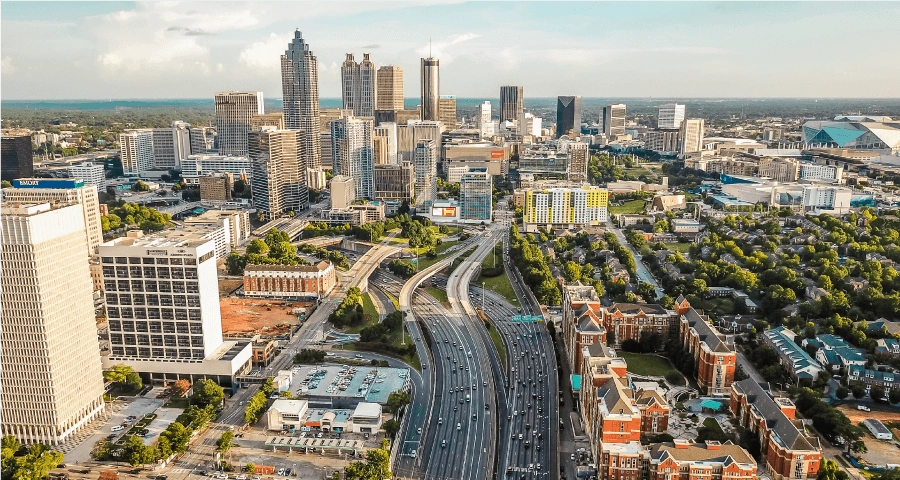
In a world that currently feels like an alternate version of an evil Gotham City with the Bat-Signal broken, we need to rethink our behavior. Traffic deaths in the U.S. jumped in early 2022 and hit a 20-year high, with over 9,500 people killed in traffic crashes within the first three months of the year.
According to the National Highway Transportation Safety Administration, 42,915 people died on America’s roads in 2021. That is enough people to fill a professional baseball stadium, and this number is the highest total since 2007. To break it down even further, 13% of those who died were among people walking, totaling 7,342 deaths—the highest number of pedestrian fatalities in decades. And we set another record with 9%, or 6,101, of the lives lost among motorcyclists, the highest ever recorded.

The U.S. Department of Transportation tracks all fatal crashes by geographical location, and it is no surprise that many of them happen in urban areas. To expand on that, we also know there are adverse impacts on certain groups: American Indian or Alaska Native, Black or African American, and Pacific Islanders for vehicle fatalities and Hispanic Latinos for pedestrian fatalities.
The traditional safety approaches such as engineering, enforcement, education, and emergency response are not working in our current societal situation. According to the National Roadway Safety Strategy launched in 2022, there is a new safe system approach premised on zero being the only acceptable number of deaths and serious injuries on our roadways. What is interesting about this new approach is that it not only focuses on traditional methods but also on the fact that humans make mistakes and decisions counterintuitive to their personal well-being.
While this new safety strategy is a great start, what if we are missing something? None of these strategies address how much human behavior has changed over the last three years. We are coming out of a three-year-long pandemic and are facing civil unrest, political division, natural disasters, and gun violence, and those are just the headlines. Our society is tired, angry, and frustrated; those emotions and behaviors are impacting our driving abilities.
While there does not seem to be one causative factor for the dramatic increase in roadway fatalities, the increase in reckless behavior is likely the confluence of increased drug and alcohol use, lack of safety constraints, and greater opportunities for speeding and reckless driving. These issues can be addressed with improved regulations; however, there is little political willpower to do so.
For example, according to the World Health Organization (WHO), U.S. law does not require seatbelt use in the back seat, unlike most of the world. In addition, while many states have passed stricter seatbelt laws, the federal government has not done so. You may wonder why. Well, it seems like U.S. citizens favor privacy and autonomy rather than strict safety protocols, which reduces the ability of lawmakers to pass higher standards of behavior laws.
So, what is the solution? If citizens do not want their behavior regulated further, it is time for all of us to share responsibility. Infrastructure investments must address human behavior to succeed and eliminate fatalities and serious injuries. It is time to use behavioral science in the planning of our transportation network to not only anticipate traffic crashes and peak volume times but also anticipate how humans will respond to those and other factors. Let’s think of it as “therapy” for the road system. Instead of changing behaviors on the roadways, we should anticipate them and plan to avoid fatalities.
The good news is that there have been tremendous advancements in artificial intelligence that can positively impact both transportation planning and systems operations.
There are systems that can use predictive analytics to determine where, when, and under what circumstances crashes are going to happen. With this information, transportation authorities can benefit from smart operating systems to proactively address potential issues. With solutions like Aurigo Masterworks, they can streamline their planning process and improve mobilization efficiencies during project construction.
A solution like Masterworks Community Engagement can effectively understand and capture the real needs of actual transit users and enable agencies to capture real-time feedback during the planning phase.
While no one solution will solve all public health issues on our roadways, if we use all the tools we have at our disposal, along with innovative thinking and approaches, we can move the needle toward a safer road system for all users.
Therapy for road systems is a long and ongoing process that requires dedicated, deliberate actions. With consistency and determination, it really does work!
About the author
Jennifer Cohen brings extensive public sector leadership experience, having served as Director of the Delaware Department of Transportation and as Industry Lead, Transportation at Aurigo, where she contributed to advancing infrastructure program strategy and delivery.
You might like
Addressing the equity gap in public infrastructure: Creating meaningful capital programs for all constituents
Learn more
About the author
Jennifer Cohan brings extensive public sector leadership experience, having served as Director of the Delaware Department of Transportation and as Industry Lead, Transportation at Aurigo, where she contributed to advancing infrastructure program strategy and delivery.
You might like