

Leadership insight
Capital projects & the new Trump administration
Potential policy shifts under the Trump administration could reshape U.S. capital projects through regulatory changes, funding priorities, and permitting reforms, requiring agencies to adopt adaptive planning strategies and data-driven decision-making to navigate uncertainty.


When administrations change, there is an inevitable period of uncertainty. Leadership handovers, policy shifts, public sentiment, legislative changes, and new priorities come into play. As Donald Trump returns to the Oval Office in January 2025, the announcement during his November 6 victory speech will remain foremost in people’s minds, “I will govern by a simple motto, promises made, promises kept.”
What could the next four years under the Trump administration mean for public infrastructure owners, and what are the promises and priorities of the new administration?
More highways, more ridges
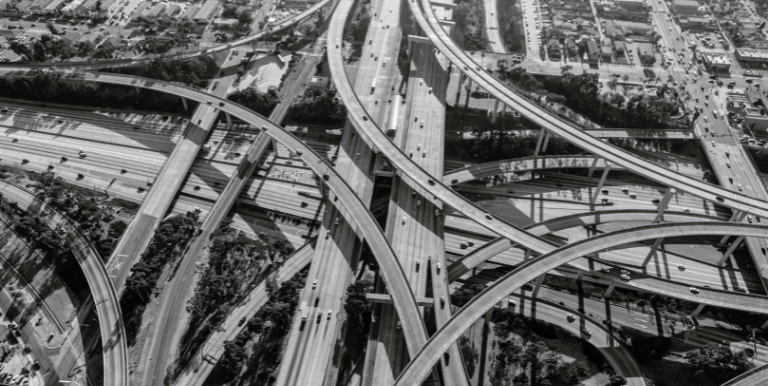
It seems reasonable to anticipate a stronger focus on building highway infrastructure in the coming years. State DOTs might see a shift in funding toward roads and bridges, reflecting Trump’s familiarity with the traditional construction industries. This could come at the expense of rail and transit systems, forcing less profitable rail routes to justify their development plans or even their bare existence.
As road projects take priority, railways are likely to face stagnation or even cuts, with flat funding being the best-case scenario.
Although some may eventually advocate for massive, renewed investment in rail and transit, such a shift seems unlikely within the next four to six years.

Less red tape, more economic interest
We know that Trump has advocated for deregulation and wants to focus on American economic interests over international agreements (for example, withdrawing from the Paris Agreement on climate change).
As a result, his efforts will likely center on cutting red tape through initiatives such as the One Federal Decision (OFD) approach.
The OFD establishes discipline and accountability in the environmental review and authorization of major infrastructure projects. Instead of running a project past several agencies (the Environmental Protection Agency, the Army Corps of Engineers, etc.), the OFD was created to reduce the time required to complete environmental reviews; under them, no single agency can hold up an entire project. Power is given to a single “Cognizant Agency” to make the final call.
While cutting red tape has the potential to streamline infrastructure projects, the requirements of the Build America, Buy America Act could create challenges.
This Act, part of the Infrastructure Investment and Jobs Act (IIJA), mandates that federally funded infrastructure projects use domestically produced iron, steel, manufactured products, and construction materials.
While the intent is to prioritize American economic interests, the practical impact could be counterproductive if domestic suppliers are unable to meet the increased demand. For instance, one of my former counterparts in Alaska had to secure 1,200 Buy America exemptions just to build a ferryboat because many components simply weren’t manufactured in the U.S. Pushing too hard on these requirements could lead to delays and bottlenecks, which could slow down endeavors and counteract the efficiency gains intended by initiatives like the OFD, which seeks to cut through regulatory red tape.
Current infrastructure projects are heavily influenced by the IIJA and the Inflation Reduction Act (IRA). Since the IIJA is already law, making swift changes to its provisions has been challenging.
As a result, initiatives under the IIJA will almost certainly continue until its expiration in 2026.
Meanwhile, projects under the IRA that have yet to receive funding obligated to them may be seeing a shift in priorities with the expected increased investments in streets and highways, and the flat or reduced funding for rail and transit plans.
Oil and gas to scale, alternative energy to a limited extent
The IRA also funds several alternative energy projects. Given that the last Trump administration withdrew from the Paris Agreement on climate change, we can expect attempts to defund certain alternative energy efforts and oil and gas operations to scale up. Due to congressional action on the Paris Accords during the Biden Administration, it will be more difficult to withdraw in 2025, but unobligated IRA funding can certainly be redirected. The country’s power grids are outdated and a matter of concern.
With the growing demand for power from data centers—where our businesses reside today, along with Bitcoins and social media—power markets will see explosive growth.
The IRA has provisions that incentivize the development of power transmission. We can expect these programs to continue and even gain greater emphasis as the U.S. demands more power to run the growing number of AI-based applications.
Good time ahead for ports
Ports are poised for stability and growth. With the continued demand for goods—much of which arrives from overseas—ports will likely benefit from increased investments to support this vital link in global trade. What remains to be seen is the potential disruption to that growth should the threat of large tariffs on certain nations come to pass.
Technology to help make transitions
As infrastructure projects continue to evolve, government agencies will need to adapt to changing priorities and dynamics while enduring reductions in their headcount. To navigate this shift effectively, there is an increasing need for technology solutions that can help manage capital programs. These tools allow owners to simulate “what-if” scenarios, quickly identifying which ventures to prioritize and which to delay, ensuring smoother, quicker, and more efficient decision-making throughout the process.
These are my predictions based on years of observation and experience. Whatever comes to pass, the infrastructure landscape will evolve, with technology leading the charge.
It will be interesting to see how these priorities take shape and influence the nation’s capital programs over the next four years and beyond.
About the author
Michael Tooley brings over 35 years of public service and leadership experience to Aurigo. He previously served as Director of the Montana Department of Transportation and chaired the AASHTO Committee on Safety. Prior to leading Montana DOT, he was the Chief of the Montana Highway Patrol and earlier served as a corpsman in the U.S. Naval Reserve. As Vice President, Industry Group at Aurigo, Michael drives the expansion of industry partnerships across public and private markets and deepens engagement with sectors aligned to Aurigo’s mission. He is a graduate of Grand Canyon University and the FBI National Academy in Quantico, Virginia.
You might like


About the author
Michael Tooley brings over 35 years of public service and leadership experience to Aurigo. He previously served as Director of the Montana Department of Transportation and chaired the AASHTO Committee on Safety. Prior to leading Montana DOT, he was the Chief of the Montana Highway Patrol and earlier served as a corpsman in the U.S. Naval Reserve. As Vice President, Industry Group at Aurigo, Michael drives the expansion of industry partnerships across public and private markets and deepens engagement with sectors aligned to Aurigo’s mission. He is a graduate of Grand Canyon University and the FBI National Academy in Quantico, Virginia.