
Blog
Construction reporting and its digitization
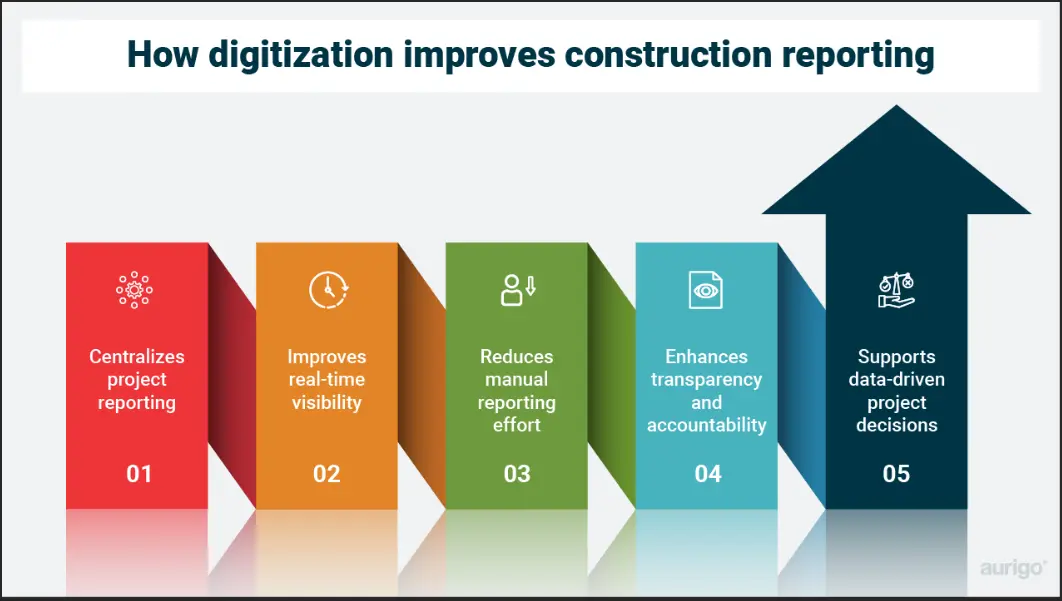
Digitizing construction reporting transforms fragmented, manual updates into real-time, structured insights. By improving data accuracy and visibility, organizations can make faster decisions, reduce risks, and maintain control across complex construction programs.


Construction project reporting involves tracking, communicating, and documenting project progress to stakeholders, including owners, executives, chief engineers, contractors, and project managers. Therefore, it is critical that information gathered across all construction phases, from design and planning through project closeout and occupancy, is accurately integrated and reported. This information must also be shared in real time with precision. The availability of the correct information at the right time enables better decision-making and eliminates guesswork and gut-level interventions. With traditional manual reporting still practiced in the industry, implementing an effective project reporting system improves performance, prevents plans from getting derailed, and speeds up project approvals by bringing visibility into projects and putting different stakeholders on the same page.
Types of construction reports
Types of construction reports
-
Project reports provide details of the project’s overall status or specific aspects of day-to-day operations. Regardless of the type of report, it contains data based on economic, technical, or financial information that indicates the project’s health.
- Daily reports document day-to-day construction site activities. These reports typically include information such as weather conditions, work performed, materials used, equipment on site, and any issues or incidents that occurred on a particular workday.
- Progress reports are one of the most critical reports generated during project execution, summarizing their status. It informs stakeholders of the project’s status at any given time. Progress reports usually cover the following items:
- Change orders
- Status of submittals
- Materials ordered
- Equipment delivered
- Estimated costs and actual costs
- Scheduled and completed labor hours
- Status of final inspections
- Payments received and payments due
- Cost and budget reports provide details regarding the project’s financial data, indicating its fiscal health. It includes information about materials used, labor costs, equipment procured, and other expenses. They help compare estimated expenditures with actual. Cost and budget reports are closely monitored to assess cash flow and ensure expenses remain within budget and the project stays on track.
- Schedule reports consist of a list of project activities, labor hours, milestones, and deliverables scheduled and tied to a deadline. A schedule consists of a planned start date,an end date, and the resources assigned to each task. Such a report is critical to ensure the timely completion of the project.
- Material reports enable you to keep track of the quality and quantity of material used during the project, including procurement date, price, price comparison, source, and vendor details. This report is essentially a resource report that helps minimize wasteful expenditure and ineffective resource utilization.
- Market trend analysis reports provide insights into the latest trends in the industry and are popular among contractors. They help identify new products, materials to use, and the latest technology to accelerate project delivery. These reports are also used to predict changes in material and labor pricing to improve cost management.
- Safety reports include information on any safety incidents or concerns during construction. These reports assess the risks, hazards, and construction site safety to prevent accidents onsite.
- Risk reports summarize the risk profile of the project. The manager maintains a register that is updated whenever an unforeseen event is anticipated. It helps prioritize work based on the risk intensity (from low to high) associated with each task. This helps avoid project delays by anticipating and forecasting challenges arising during the project.
- Request for Information (RFI) reports document questions and clarifications raised about the project’s plans, specifications, materials, or agreements. Such requests require detailed explanations to enable work to progress. Contractors, clients, and stakeholders raise these questions throughout the project to check if the project’s progress aligns with the architect’s or engineer’s vision.
- Submittal reports consist of information that the contractor provides, requesting approval for specific materials and equipment before they’re procured and sent to the project site. These documents and physical samples, including product data, shop drawings, material samples, warranties, and Operations and Maintenance data (O&M), must be delivered to Architects and Engineers (A-Es) and members of the design team. There are three types of submittal reports: action, informational, and closeout submittals. Submittal reports are vital for quality control, as they are the only way to verify quality, functionality, and compliance with the plan and specifications.

Why do we need to digitize construction reports?
Final thoughts
Construction project reporting aims to ensure transparency, accountability, and effective communication throughout the project. Good data-based reporting can serve as a decision-support system within a construction project, where decisions depend on innumerable variables—from weather to workforce availability. Therefore, the need to invest in effective construction project reporting software becomes obvious. Ideally, such a tool will standardize data from multiple sources and consolidate it into a single, consistent source of truth. Aurigo Masterworks has state-of-the-art digital reporting tools that produce reliable, comprehensive, and timely reports, helping you identify opportunities for improvement. The construction industry has traditionally invested much time and resources in generating these reports. It is time to change that with digital reporting tools to simplify and strengthen the reporting process. .
To learn more about Aurigo Masterworks, click here.
You might like


Frequently asked questions
Why is construction reporting critical to project success?
Construction reporting provides the foundation for monitoring progress, identifying risks, and maintaining accountability. Without accurate and timely reporting, project teams lack the visibility needed to make informed decisions and keep projects on track.
What challenges do traditional reporting methods create?
Manual reporting processes often rely on spreadsheets and delayed updates, leading to inconsistencies and limited real-time insight. This makes it difficult to identify issues early and increases the risk of cost overruns and schedule delays.
How does digitization improve construction reporting outcomes?
Digitization enables real-time data capture, standardized reporting, and centralized access to project information. This improves accuracy, enhances transparency, and allows teams to respond proactively to changing conditions.