
Blog
How to efficiently manage construction project costs
Effective cost management in construction requires more than tracking expenses—it demands continuous visibility, disciplined planning, and proactive decision-making. Modern digital tools enable organizations to monitor costs in real time, identify risks early, and maintain financial control across complex projects.


No matter the size or scope, finance directors need complete visibility of where every dollar is going to guarantee fiscal accountability. Yet, without real-time data, staying within budget becomes a constant challenge. Studies show that major capital projects experience an average of 79% cost overrun relative to the initial budget, with a typical schedule delay of 6 to 24 months. When you layer in fragmented tracking systems and manual workflows, even minor oversights can trigger major financial consequences.
To stay ahead of cost risks, directors must actively monitor spending against forecasts and enforce structured processes that support accountability. Modern construction Program Management Information System (PMIS) software empowers agencies to do just that: offer real-time visibility, automated controls, and the ability to course-correct early. With the right system in place, owners can minimize surprises, make data-driven decisions, and keep projects financially on track from beginning to end.
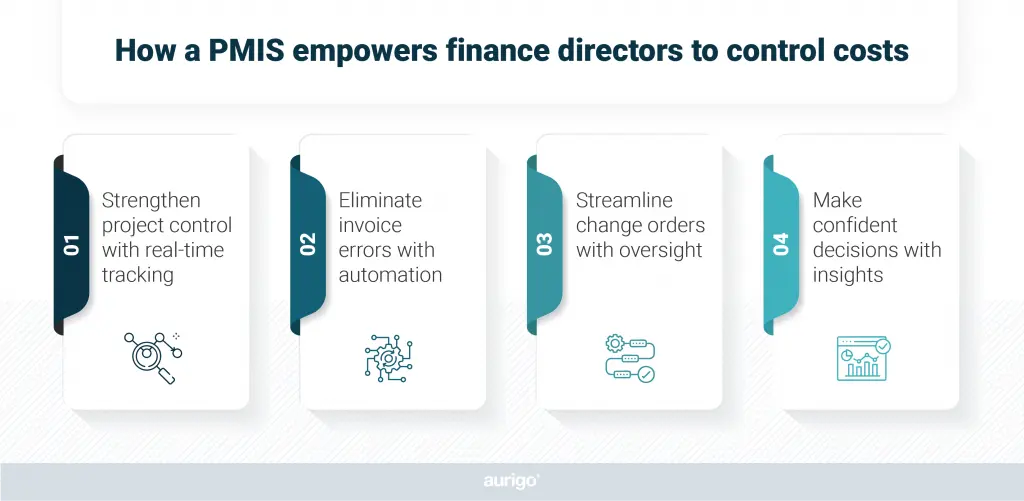
How a modern PMIS helps finance directors maintain cost control
1. Proactive budget enforcement and real-time cost tracking
Budget overruns often occur when costs are reviewed only after funds have been spent. Digitizing the processes changes this dynamic by enabling proactive budget enforcement. Every expense is recorded in real time, giving owners full visibility into committed costs versus actual spending at any point in the project life cycle.
If a project begins to approach or exceed its financial limits, the system immediately flags potential overruns, enabling project managers to act early and prevent costs from escalating further. Built-in stop-and-flag mechanisms automatically block entries that exceed the approved budget or commitment unless a change order or budget adjustment is submitted. This real-time oversight not only catches unauthorized spending before it becomes a problem but also reinforces budget discipline throughout the project, ensuring funds are managed within defined limits from day one.
2. Invoice validation and automatic expense controls
Manual invoice processing is prone to errors, duplicate payments, and unauthorized charges. To reduce risk, construction program management information system software offers automated invoice validation that enforces financial accuracy at every step. Each one is tied directly to a specific commitment, and the system automatically checks it against contract terms and budget limits. If a contractor submits a bill that exceeds the approved amount, this discrepancy is flagged and immediately halted. Items within approved thresholds are processed automatically, streamlining approvals while maintaining strict cost control. This built-in validation ensures every invoice is traceable to its original commitment, reducing financial errors, preventing overpayments, and enforcing fiscal discipline across the project.
3. Streamlined change orders and budget oversight
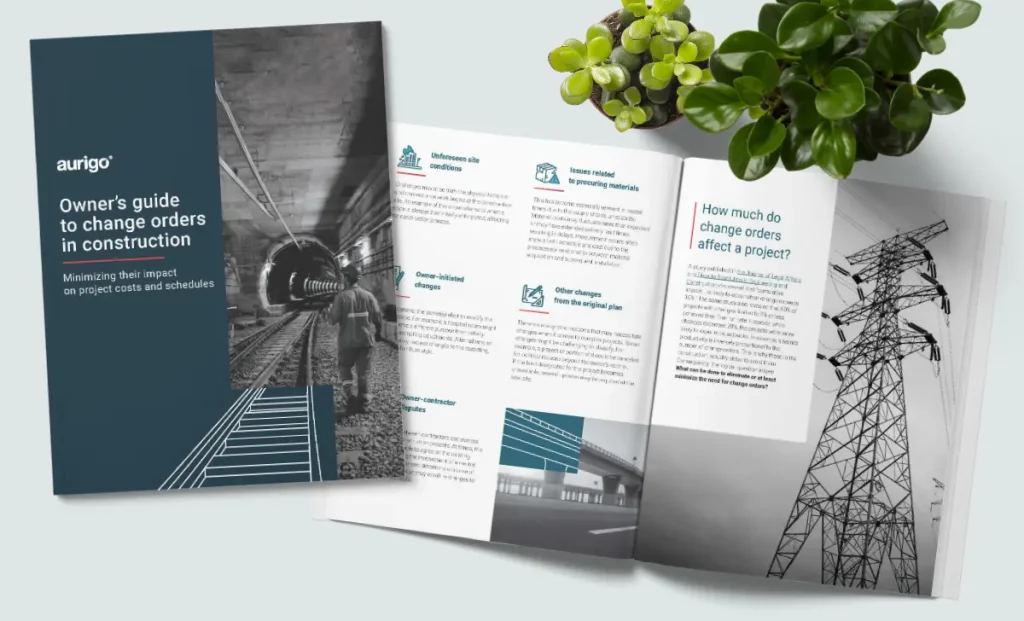
Scope changes, unforeseen site conditions, and evolving owner requirements are inevitable in construction. Without a structured way to manage these adjustments, budgets can quickly spiral out of control. The right PMIS can streamline this process by centralizing change order tracking and enabling real-time cost assessments before any modification is approved, ensuring owners understand the full budgetary impact.
To maintain oversight, the system also enforces custom approval workflows aligned with internal thresholds and stakeholder roles. Automatic alerts are triggered when changes or expenses exceed predefined limits, ensuring that every adjustment follows the correct chain of command. This not only prevents unauthorized spending and discrepancies but also creates a transparent audit trail for future reference. Together, these controls help directors respond to changes with agility—without losing sight of the budget.
4. Data-driven insights for confident decisions
Beyond enforcing budgets, a purpose-built PMIS system becomes essential in construction to provide real-time financial intelligence to support better decision-making. Live dashboards offer instant visibility into project expenditures, helping owners quickly compare projected versus actual costs. AI-powered analytics flag potential cost risks early, giving teams time to adjust plans before overruns occur. The system also streamlines compliance tracking, guaranteeing adherence to government funding requirements and financial reporting standards. With these data-driven tools, directors can anticipate challenges, reallocate funds strategically, and move forward with greater confidence in their budget position.
Final thoughts
Effective financial management in construction depends on well-defined systems that handle every transaction, from commitments and invoices to budget changes. A PMIS solution such as Aurigo Masterworks ensures these processes are followed from day one, reducing risk and enabling precise budget control. By bringing information together in a centralized system and through accurate reporting, the system eliminates errors and keeps costs aligned with approved budgets. Its built-in cost controls, analytics, and forecasting tools help construction owners anticipate financial impacts, reallocate funds when needed, and make confident, informed decisions—whether applying for more funding, cutting costs, or adjusting scope through value engineering. With full visibility into financial performance and automated workflows that enforce compliance, this powerful solution empowers agencies to operate efficiently, manage risk proactively, and keep every project on track and within budget.
You might like

Frequently asked questions
Why is cost management still a challenge in construction projects?
Cost overruns often stem from fragmented data, delayed visibility into field conditions, and reactive decision-making. When financial, contractual, and operational information is not connected, project teams struggle to detect risks early. This leads to late interventions, where corrective actions are more expensive and less effective.
How can organizations move from reactive to proactive cost control?
The shift requires integrating financial oversight with real-time project data. When teams can track commitments, actuals, and forecasts continuously, they gain the ability to identify variances early and adjust course before overruns escalate. Proactive cost management is less about control mechanisms and more about timely, informed decision-making.
What role does technology play in improving construction cost efficiency?
Technology creates a unified environment where budgets, contracts, invoices, and field updates are connected. This integration enables better forecasting, clearer accountability, and more accurate tracking of project performance. Over time, it strengthens financial discipline and improves the predictability of project outcomes.