
Blog
Streamline DBE compliance with advanced software solutions
DBE compliance is evolving from a reporting requirement into a structured, data-driven discipline. Advanced software solutions enable agencies to track participation, ensure transparency, and strengthen accountability across federally funded infrastructure programs.


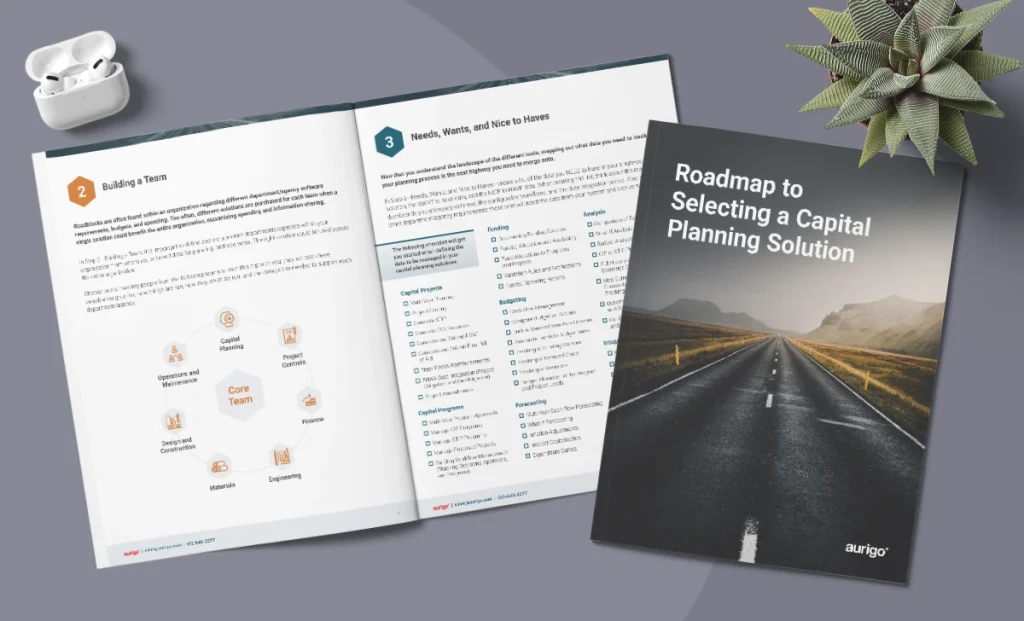
The 6 Step Roadmap to Capital Planning Modernization
The Disadvantaged Business Enterprise (DBE) Program is essential for advancing civil rights and ensuring fair access to federal funding for minority-owned businesses, which comprise nearly 21% of all U.S. firms. Mandated for recipients of federal highway dollars, the program aims to award at least 10% of federally contracted project funds to DBEs. Firms are defined as DBEs when at least 51% are owned and controlled by socially and economically disadvantaged individuals. In 2021, the DBE program was reauthorized through the Infrastructure Investment and Jobs Act, underscoring the federal commitment to equitable economic opportunities.
Despite its importance, many public agencies rely on outdated methods such as paper forms and spreadsheets to track DBE participation. This can result in inefficiencies, errors, and substantial penalties. DOT noncompliance cases now represent nearly 29% of active procurement and grant fraud investigations. These risks underscore the need for modernizing compliance processes.
Challenges faced by public owners in tracking DBE compliance
• High risk of errors and data accuracy
Precise data is required to define, monitor, and validate DBE business commitments and training goals. Manual data entry and paper-based processes are susceptible to errors, which can undermine the reliability of records. Inaccuracies present notable risks during audits and reviews. Any mistakes in the data input, such as incorrect engineer estimates or flawed contractor reports, can compromise the calculation of DBE goals and training hours. This affects the DBE validation process and creates potential issues during audits and reporting, making it more difficult to reliably meet civil rights and labor management requirements.
• Delays in compliance verification
Relying on paper forms, spreadsheets, and manual data aggregation for project estimates, bids, and contractor reports slows the compliance verification process, making it difficult to ensure timely adherence to federal regulations. These delays can hinder effective oversight and increase the risk of missing DBE business goals. They also affect project timelines and increase administrative burdens.
• Difficulty in maintaining comprehensive records and audit trail
Manual processes can make it challenging to maintain thorough, organized records, including reliable audit trails. A lack of comprehensive documentation complicates audits and increases the risk of noncompliance penalties, which can ultimately result in lost federal funding.
So, what can public owners do to address these challenges?
Going digital is key. With the right DBE compliance management software, public owners can enhance the overall DBE compliance process by improving efficiency and transparency.
What features should a government agency look for in a software solution to manage DBE commitments?
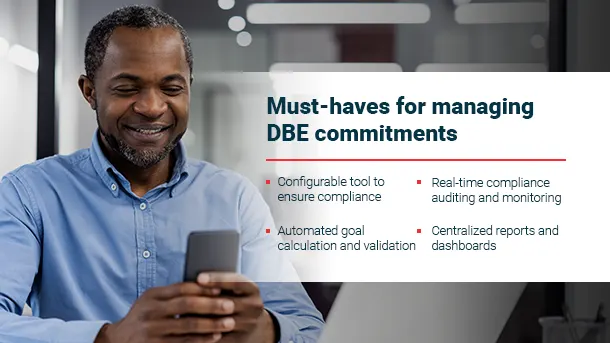
- Configurable civil rights and training management: Allows agencies to define and customize civil rights contract requirements, DBE goals, and on-the-job training specifications at the project and line-item levels, ensuring compliance with local, state, and federal guidelines.
- Automated DBE goal calculation and validation: Automates the calculation and validation of DBE goals based on the engineer’s estimates and contractor bids to reduce manual errors and ensure commitments are met before contract awards.
- Real-time monitoring and compliance checks: Enables real-time tracking and validation of DBE regulations and on-the-job training hours during project phases, verifying consistent compliance throughout the project.
- Comprehensive auditing and reporting: Implements automated reporting, complete audit trails, and tools to audit contractors’ good faith efforts toward achieving workforce diversity goals, ensuring accountability and thorough oversight.
- Centralized dashboard for oversight: Provides a centralized dashboard for a holistic view of DBE commitments, training progress, and project actuals to facilitate informed decision-making and efficient project management.
Are you looking to elevate your DBE compliance processes? Masterworks civil rights and labor management software offers a comprehensive solution. It is designed to automate reporting, simplify approvals, and help public owners track, measure, and report DBE goals to meet federal regulations. With Aurigo Masterworks, you can meet regulatory requirements and enhance your DBE program’s overall effectiveness.
You might like
Frequently asked questions
Why is DBE compliance becoming more complex for agencies?
DBE compliance extends beyond meeting participation targets; it requires continuous tracking, documentation, and reporting across multiple stakeholders and project phases. As funding oversight increases, agencies must demonstrate transparency and accuracy, making manual processes increasingly difficult to sustain.
What limitations do traditional DBE compliance processes create?
Manual tracking and fragmented systems often lead to inconsistent reporting, delayed validation, and limited visibility into subcontractor participation. This can increase compliance risk, create administrative burden, and make it harder for agencies to demonstrate adherence to federal requirements.
How do advanced software solutions improve DBE compliance?
Modern platforms centralize compliance data, automate tracking, and provide real-time visibility into DBE participation. This enables agencies to maintain accurate records, streamline reporting, and proactively address gaps, ensuring compliance while reducing administrative complexity.